






Diese Website verwendet Cookies und ähnliche Technologien. Dabei handelt es sich um kleine Textdateien, die auf eurem Computer gespeichert und ausgelesen werden. Indem ihr auf "Alles akzeptieren" klickt, stimmt ihr der Verarbeitung von Daten, der Erstellung und Verarbeitung von individuellen Nutzungsprofilen über Websites und über Partner und Geräte hinweg sowie der Übermittlung eurer Daten an Drittanbieter zu, die eure Daten teilweise in Ländern außerhalb der Europäischen Union verarbeiten (GDPR Art. 49). Einzelheiten hierzu findet ihr in den Datenschutzhinweisen. Die Daten werden für Analysen und für eigene Zwecke Dritter verwendet. Weitere Informationen, auch über die Datenverarbeitung durch Drittanbieter und die Möglichkeit des Widerrufs, findet ihr in den Einstellungen und in unseren Datenschutzhinweisen. Hier könnt ihr mit den notwendigen Tools fortfahren.
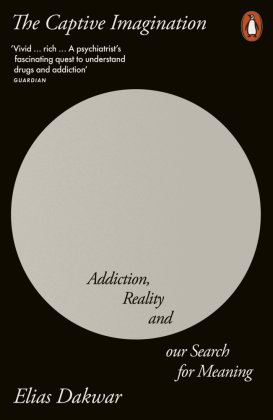
- Verlag: Penguin Books UK
- Autor: Elias Dakwar
- Artikel-Nr.: KNV97808996
- ISBN: 9781802063769
'In rich and arresting prose, and with radical originality, Dakwar expands initial, pragmatic insights about addiction into a far-reaching examination of authenticity, exploring how we define a happy life, a good life, a valid life.' - Andrew Solomon, author of The Noonday Demon
A deeply humane and revolutionary new framework for understanding and treating addiction
What causes addiction, and how should we treat it? Today it is understood primarily as a brain disease, yet in this bold reimagining of addiction, pioneering psychiatrist Elias Dakwar argues that this is false. It fails to explain, among other things, why many people can enjoy drugs without developing a dependency on them. Despite decades of neuroscientific research, we aren't much closer to truly understanding the nature of addiction, nor to addressing it effectively.
In The Captive Imagination, Dakwar argues that addiction is an existential challenge, requiring a more philosophical and multidisciplinary approach, as well as a lens through which we can better understand ourselves. Addiction stems from our desire for happiness: whether addicts or not, we all struggle against meaninglessness, and resort to false solutions to our despair. Dakwar also shows how our individual capacity for self-delusion relates to our collective self-inflicted crises, from environmental destruction to social injustice.
Drawing on vivid stories of his own patients, path-breaking research, and decades of clinical experience, The Captive Imagination offers a novel framework for understanding and overcoming addiction, as well as human suffering more generally.