






Diese Website verwendet Cookies und ähnliche Technologien. Dabei handelt es sich um kleine Textdateien, die auf eurem Computer gespeichert und ausgelesen werden. Indem ihr auf "Alles akzeptieren" klickt, stimmt ihr der Verarbeitung von Daten, der Erstellung und Verarbeitung von individuellen Nutzungsprofilen über Websites und über Partner und Geräte hinweg sowie der Übermittlung eurer Daten an Drittanbieter zu, die eure Daten teilweise in Ländern außerhalb der Europäischen Union verarbeiten (GDPR Art. 49). Einzelheiten hierzu findet ihr in den Datenschutzhinweisen. Die Daten werden für Analysen und für eigene Zwecke Dritter verwendet. Weitere Informationen, auch über die Datenverarbeitung durch Drittanbieter und die Möglichkeit des Widerrufs, findet ihr in den Einstellungen und in unseren Datenschutzhinweisen. Hier könnt ihr mit den notwendigen Tools fortfahren.
- Verlag: Penguin Books UK
- Autor: W. G. Sebald
- Artikel-Nr.: KNV97809006
- ISBN: 9780241144190
'We have become suspicious, rightly, of claims for literary greatness, but in Sebald's case the claim was triumphantly justified. He was, he is, the real thing' John Banville, Guardian
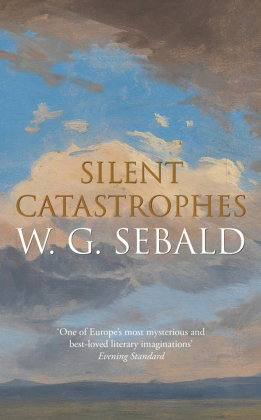
From acclaimed critic, novelist and academic W. G. Sebald, author of Austerlitz and The Rings of Saturn, a collection of essay on the Austrian writers who meant so much to him - appearing for the first time in English
As a German in self-chosen exile from his country of birth, Sebald found a particular affinity with these writers from a neighbouring nation. The traumatic evolution of Austria from vast empire to diminutive Alpine republic, followed by its annexation by Germany, meant that concepts such as 'home/land', 'borderland' and 'exile' occupy a prominent role in its literature, just as they would in Sebald's own.
Through a series of remarkable close readings of texts by Bernhard, Stifter, Kafka, Handke, Roth and more, Sebald charts both the pathologies which so often drove their work and the seismic historical forces which shaped them. This sequence of essays will be a revelation to Sebald's English-language readers, tracing as they do so many of the themes which animate his own literary writings, to which these essays form a kind of prelude.
'A writer whose life and work has become a wonderful vindication of literary culture in all its subtle and entrancing complexity' Guardian
'Sebald was probably the greatest intellect and voice of the late twentieth century' Antony Beevor, The Times