






Diese Website verwendet Cookies und ähnliche Technologien. Dabei handelt es sich um kleine Textdateien, die auf eurem Computer gespeichert und ausgelesen werden. Indem ihr auf "Alles akzeptieren" klickt, stimmt ihr der Verarbeitung von Daten, der Erstellung und Verarbeitung von individuellen Nutzungsprofilen über Websites und über Partner und Geräte hinweg sowie der Übermittlung eurer Daten an Drittanbieter zu, die eure Daten teilweise in Ländern außerhalb der Europäischen Union verarbeiten (GDPR Art. 49). Einzelheiten hierzu findet ihr in den Datenschutzhinweisen. Die Daten werden für Analysen und für eigene Zwecke Dritter verwendet. Weitere Informationen, auch über die Datenverarbeitung durch Drittanbieter und die Möglichkeit des Widerrufs, findet ihr in den Einstellungen und in unseren Datenschutzhinweisen. Hier könnt ihr mit den notwendigen Tools fortfahren.
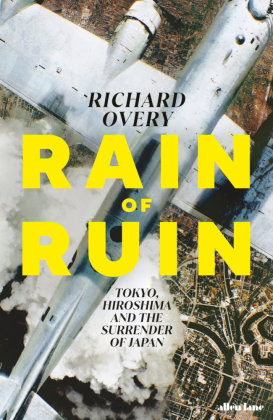
- Verlag: Penguin Books UK
- Autor: Richard Overy
- Artikel-Nr.: KNV97809152
- ISBN: 9780241700693
A remarkable account of the terrible climax of the Second World War in Asia, published to coincide with the 80th anniversary of the Hiroshima bombing.
A Telegraph Book of the Year 2025
A History Extra History Book of the Year 2025
'A short but quietly devastating book, in which Overy adds new perspectives to a subject that has often been approached from a narrowly American angle... Overy's book is a sombre reminder that the border between civilisation and savagery is wafer-thin.' - Philip Snow, Literary Review
In the closing months of the Second World War hundreds of thousands of Japanese, mostly civilians, died in a final outburst of violence from the air. American planes were beginning to run low on plausible targets when it was decided to use two atomic weapons in a final, terrible flourish to try to end the war.
Richard Overy's remarkable new book rethinks how we should regard this last stage of the war and the role of the bombing. This book explores the way in which the willingness to kill civilians and destroy cities became normalized in the course of a horrific war as moral concerns were blunted and scientists, airmen, and politicians followed a strategy of mass destruction they would never have endorsed before the war began. But it also engages with the new scholarship that shows how complex the effort to end the war was in Japan, where 'surrender' was entirely foreign to Japanese culture.