






Diese Website verwendet Cookies und ähnliche Technologien. Dabei handelt es sich um kleine Textdateien, die auf eurem Computer gespeichert und ausgelesen werden. Indem ihr auf "Alles akzeptieren" klickt, stimmt ihr der Verarbeitung von Daten, der Erstellung und Verarbeitung von individuellen Nutzungsprofilen über Websites und über Partner und Geräte hinweg sowie der Übermittlung eurer Daten an Drittanbieter zu, die eure Daten teilweise in Ländern außerhalb der Europäischen Union verarbeiten (GDPR Art. 49). Einzelheiten hierzu findet ihr in den Datenschutzhinweisen. Die Daten werden für Analysen und für eigene Zwecke Dritter verwendet. Weitere Informationen, auch über die Datenverarbeitung durch Drittanbieter und die Möglichkeit des Widerrufs, findet ihr in den Einstellungen und in unseren Datenschutzhinweisen. Hier könnt ihr mit den notwendigen Tools fortfahren.
- Verlag: Penguin Books UK
- Autor: Kelly Clancy
- Artikel-Nr.: KNV97808930
- ISBN: 9780141998930
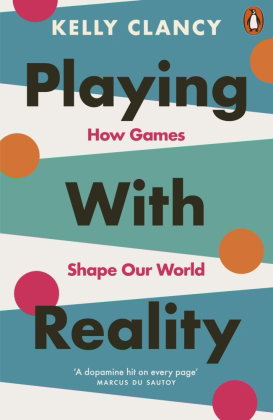
'A dopamine hit on every page' Marcus du Sautoy
A sweeping intellectual history of games and their importance to human progress.
We play games to learn about the world, to understand our minds and the minds of others, and to practice making predictions about the future. Games are thought to be older than written language, and have now become the dominant cultural media-bigger than movies, TV, music, and literature combined. They are also fun. But as neuroscientist and physicist Kelly Clancy argues, it's time we started taking them more seriously.
In Playing With Reality, she chronicles the riveting and hidden history of games since the Enlightenment, weaving an unexpected path through military theory, biology, artificial intelligence, neuroscience, cognitive psychology, and the future of democracy. Games, Clancy shows us, have been deeply intertwined with the arc of history. War games shaped the outcomes of real wars in nineteenth and twentieth century Europe. Game theory warped our understanding of human behaviour and brought us to the brink of annihilation-yet still underlies basic assumptions in economics, politics, and technology. We used games to teach computers how to learn for themselves, and now we are designing games that will determine the shape of society and future of democracy. Games also inform the basic systems that govern our daily lives: the social media and technology that can warp our preferences, polarise us, and manufacture our desires.
Lucid, thought-provoking, and masterfully told, Playing With Reality makes the bold argument that the human fascination with games is the key to understanding our nature.