






Diese Website verwendet Cookies und ähnliche Technologien. Dabei handelt es sich um kleine Textdateien, die auf eurem Computer gespeichert und ausgelesen werden. Indem ihr auf "Alles akzeptieren" klickt, stimmt ihr der Verarbeitung von Daten, der Erstellung und Verarbeitung von individuellen Nutzungsprofilen über Websites und über Partner und Geräte hinweg sowie der Übermittlung eurer Daten an Drittanbieter zu, die eure Daten teilweise in Ländern außerhalb der Europäischen Union verarbeiten (GDPR Art. 49). Einzelheiten hierzu findet ihr in den Datenschutzhinweisen. Die Daten werden für Analysen und für eigene Zwecke Dritter verwendet. Weitere Informationen, auch über die Datenverarbeitung durch Drittanbieter und die Möglichkeit des Widerrufs, findet ihr in den Einstellungen und in unseren Datenschutzhinweisen. Hier könnt ihr mit den notwendigen Tools fortfahren.
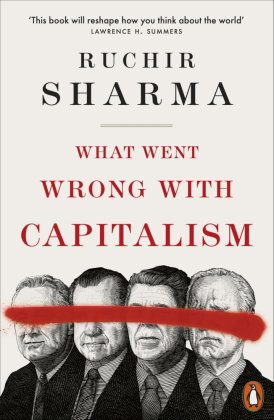
- Verlag: Penguin Books UK
- Autor: Ruchir Sharma
- Artikel-Nr.: KNV97808987
- ISBN: 9781802061031
*A Financial Times and Wall Street Journal Book of the Year*
'My book of the year' Alex Bastani, Novara Media; Tom Keene, Bloomberg
'Brilliant ... deeply arresting' Lewis Goodall, The News Agents Podcast
A radical examination by a leading financial analyst, commentator and investor of the ills of capitalism and how they can be fixed
What went wrong with capitalism? Ruchir Sharma's explanation is unlike any you have heard before. Progressives are partly right when they mock modern capitalism as "socialism for the rich," but what really happened in recent decades is that government in developed nations expanded in just about every measurable dimension, from spending and regulation to the sheer scale of its rescues each time the economy wobbled. The result, Sharma says, is "socialized risk," expensive government guarantees, for everyone-welfare for the poor, entitlements for the middle class, and bailouts for the rich.
Voters say they are disillusioned with capitalism, but a system so distorted by government interventions is a dysfunctional version of free market ideals. As a result, productivity and economic growth have slowed sharply, shrinking the pie for everyone and stoking popular anger. Since these flaws developed as the government expanded, building an even bigger state will only double down on what's gone wrong. The answer Sharma offers is a series of seven fixes to restore the balance between state support and free markets and lay the path to a more prosperous and happier future.