






Diese Website verwendet Cookies und ähnliche Technologien. Dabei handelt es sich um kleine Textdateien, die auf eurem Computer gespeichert und ausgelesen werden. Indem ihr auf "Alles akzeptieren" klickt, stimmt ihr der Verarbeitung von Daten, der Erstellung und Verarbeitung von individuellen Nutzungsprofilen über Websites und über Partner und Geräte hinweg sowie der Übermittlung eurer Daten an Drittanbieter zu, die eure Daten teilweise in Ländern außerhalb der Europäischen Union verarbeiten (GDPR Art. 49). Einzelheiten hierzu findet ihr in den Datenschutzhinweisen. Die Daten werden für Analysen und für eigene Zwecke Dritter verwendet. Weitere Informationen, auch über die Datenverarbeitung durch Drittanbieter und die Möglichkeit des Widerrufs, findet ihr in den Einstellungen und in unseren Datenschutzhinweisen. Hier könnt ihr mit den notwendigen Tools fortfahren.
- Verlag: Springer, Berlin
- Autor: Sara Mazzei
- Artikel-Nr.: KNV97856540
- ISBN: 9783658474836
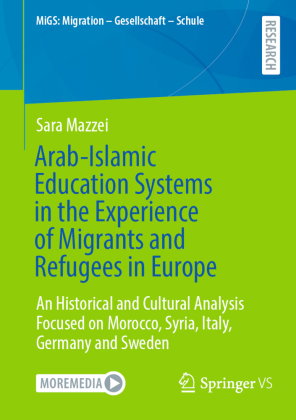
In the last decade, Europe has welcomed numerous migrants and refugees from Arab countries. Their scholastic inclusion has been challenging, and the teaching staff had to sometimes deal with unfamiliar realities. The issue has been addressed by various perspectives, from sociology to psychology, insights from which are gathered in intercultural education. In it, there are scarcity of studies that delve into pupils cultural backgrounds, and countries of origin s history is seldom regarded as a decisive factor in the formation of identity. Among Arabic-speaking communities the Moroccan and Syrian ones are the most significant and Morocco and Syria have interesting histories and education systems. Using Nussbaum's (2010) multifactorial analysis, this research aims to better understand the educational universe where Arabic-speaking pupils come from, focusing on humanities and religious education in the experience of pupils, especially from Morocco and Syria. Methodology comprehends qualitative empirical research conducted in Europe. Results show the differences experienced by pupils in their educational paths among diverse Arab and European countries and the more sensitive topics they encounter in their education in Europe in relation to their identity.