






Diese Website verwendet Cookies und ähnliche Technologien. Dabei handelt es sich um kleine Textdateien, die auf eurem Computer gespeichert und ausgelesen werden. Indem ihr auf "Alles akzeptieren" klickt, stimmt ihr der Verarbeitung von Daten, der Erstellung und Verarbeitung von individuellen Nutzungsprofilen über Websites und über Partner und Geräte hinweg sowie der Übermittlung eurer Daten an Drittanbieter zu, die eure Daten teilweise in Ländern außerhalb der Europäischen Union verarbeiten (GDPR Art. 49). Einzelheiten hierzu findet ihr in den Datenschutzhinweisen. Die Daten werden für Analysen und für eigene Zwecke Dritter verwendet. Weitere Informationen, auch über die Datenverarbeitung durch Drittanbieter und die Möglichkeit des Widerrufs, findet ihr in den Einstellungen und in unseren Datenschutzhinweisen. Hier könnt ihr mit den notwendigen Tools fortfahren.
- Verlag: Springer, Berlin
- Autor: Sudhakar Srivastava
- Artikel-Nr.: KNV97870174
- ISBN: 9789819642526
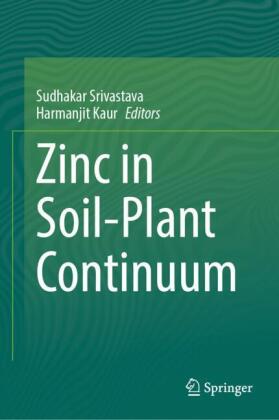
This contributed volume covers the role of zinc in soil and plant systems, providing a comprehensive understanding of factors influencing its total and bioavailable levels. The book presents the mechanisms of zinc uptake, translocation, and homeostasis in plants under both Zn-deficient and Zn-excess conditions. It also addresses a variety of agronomic, biotechnological, and microbial approaches for managing zinc nutrition in crops.
Plants have evolved intricate systems of transporters and regulatory mechanisms to obtain trace amounts of zinc, which is crucial for their growth and yield. Zinc homeostasis is essential for optimal crop performance, yet its availability in the environment varies significantly. While some regions of the world experience severe zinc deficiency, others face zinc toxicity. This poses a dual challenge: zinc deficiency in crops negatively impacts the nutrition of millions of people dependent on plant-based diets, while zinc toxicity can lead to excessive zinc accumulation in crops, posing health risks to humans. The book highlights significant advancements in improving zinc nutrition in crops, presenting cutting-edge research and strategies to address these challenges. It offers insights into the broader implications of zinc in agriculture and human nutrition, bridging the gap between plant health and public health.
This book is an invaluable resource for undergraduate and postgraduate students, researchers, and academicians. It is particularly relevant for those studying or working in the fields of crop nutrition, essential elements in plants, zinc deficiency and toxicity in soils, the role of zinc in human health, and sustainable agricultural practices.