






Diese Website verwendet Cookies und ähnliche Technologien. Dabei handelt es sich um kleine Textdateien, die auf eurem Computer gespeichert und ausgelesen werden. Indem ihr auf "Alles akzeptieren" klickt, stimmt ihr der Verarbeitung von Daten, der Erstellung und Verarbeitung von individuellen Nutzungsprofilen über Websites und über Partner und Geräte hinweg sowie der Übermittlung eurer Daten an Drittanbieter zu, die eure Daten teilweise in Ländern außerhalb der Europäischen Union verarbeiten (GDPR Art. 49). Einzelheiten hierzu findet ihr in den Datenschutzhinweisen. Die Daten werden für Analysen und für eigene Zwecke Dritter verwendet. Weitere Informationen, auch über die Datenverarbeitung durch Drittanbieter und die Möglichkeit des Widerrufs, findet ihr in den Einstellungen und in unseren Datenschutzhinweisen. Hier könnt ihr mit den notwendigen Tools fortfahren.
- Verlag: Oxford University Press
- Autor: Martha C. Nussbaum
- Artikel-Nr.: KNV97882435
- ISBN: 9780197568538
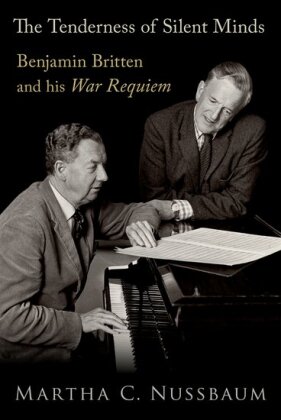
Offering a reading of Britten's views about the value and beauty of the body that situates these in the context of his thirty-nine year partnership with his lover, the singer Peter Pears, and also surveying pacifist themes in works written both before and after War Requiem, Nussbaum presents a compelling framework for critically assessing Britten's oeuvre. Nussbaum engages with a remarkably wide range of Britten's works, examining his treatment of aggression and its roots in his collaborations with the poet W.H. Auden, offering readings of the value placed on the body in early partnerships with Britten's beloved and singer Peter Pears, and surveying pacifist themes in Britten's earlier works. The analysis throughout is enriched with perspectives from Britten's personal letters and thoughtful study of the social and political backdrop of fear and homophobic disgust in mid-twentieth century Britain.
According to Nussbaum's interpretation, War Requiem confronts listeners with the reality of bodily experience in war, eliciting compassion by its depiction of beauty, vulnerability, and eroticism. Issuing a stern warning, it points the way to hope for postwar reconciliation. Nussbaum's careful analysis of Britten's score and its settings of both the Requiem Mass and Owen's poems, their historic performance at Coventry, and its philosophical commitments, unveils a message of human love in a hostile world that resonates as powerfully today as in post-war Britain.