






Diese Website verwendet Cookies und ähnliche Technologien. Dabei handelt es sich um kleine Textdateien, die auf eurem Computer gespeichert und ausgelesen werden. Indem ihr auf "Alles akzeptieren" klickt, stimmt ihr der Verarbeitung von Daten, der Erstellung und Verarbeitung von individuellen Nutzungsprofilen über Websites und über Partner und Geräte hinweg sowie der Übermittlung eurer Daten an Drittanbieter zu, die eure Daten teilweise in Ländern außerhalb der Europäischen Union verarbeiten (GDPR Art. 49). Einzelheiten hierzu findet ihr in den Datenschutzhinweisen. Die Daten werden für Analysen und für eigene Zwecke Dritter verwendet. Weitere Informationen, auch über die Datenverarbeitung durch Drittanbieter und die Möglichkeit des Widerrufs, findet ihr in den Einstellungen und in unseren Datenschutzhinweisen. Hier könnt ihr mit den notwendigen Tools fortfahren.
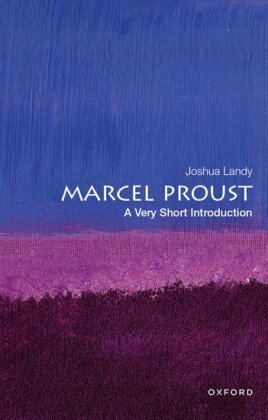
- Verlag: Oxford University Press
- Autor: Joshua Landy
- Artikel-Nr.: KNV97882438
- ISBN: 9780197586556
Marcel Proust (1871-1922) was arguably France's best-known literary writer. He was the author of stories, essays, translations, and a 3,000-page novel, In Search of Lost Time (1913-27).
This book is a brief guide to Proust's magnum opus in which Joshua Landy invites the reader to view the novel as a single quest--a quest for purpose, enchantment, identity, connection, and belonging--through the novel's fascinating treatments of memory, society, art, same-sex desire, knowledge, self-understanding, self-fashioning, and the unconscious mind.
Landy also shows why the questions Proust raises are important and exciting for all of us: how we can feel at home in the world; how we can find genuine connection with other human beings; how we can find enchantment in a world without God; how art can transform our lives; whether an artist's life can shed light on their work; what we can know about the world, other people, and ourselves; when not knowing is better than knowing; how sexual orientation affects questions of connection and identity; who we are, deep down; what memory tells us about our inner world; why it might be good to think of our life as a story; how we can feel like a single, unified person when we are torn apart by change and competing desires. Finally, Landy suggests why it's worthwhile to read the novel itself-how the long, difficult, but joyous experience of making it through 3,000 pages of prose can be transformative for our minds and souls.