






Diese Website verwendet Cookies und ähnliche Technologien. Dabei handelt es sich um kleine Textdateien, die auf eurem Computer gespeichert und ausgelesen werden. Indem ihr auf "Alles akzeptieren" klickt, stimmt ihr der Verarbeitung von Daten, der Erstellung und Verarbeitung von individuellen Nutzungsprofilen über Websites und über Partner und Geräte hinweg sowie der Übermittlung eurer Daten an Drittanbieter zu, die eure Daten teilweise in Ländern außerhalb der Europäischen Union verarbeiten (GDPR Art. 49). Einzelheiten hierzu findet ihr in den Datenschutzhinweisen. Die Daten werden für Analysen und für eigene Zwecke Dritter verwendet. Weitere Informationen, auch über die Datenverarbeitung durch Drittanbieter und die Möglichkeit des Widerrufs, findet ihr in den Einstellungen und in unseren Datenschutzhinweisen. Hier könnt ihr mit den notwendigen Tools fortfahren.
- Verlag: Springer, Berlin
- Autor: Cecilia Costa
- Artikel-Nr.: KNV98100452
- ISBN: 9783031942037
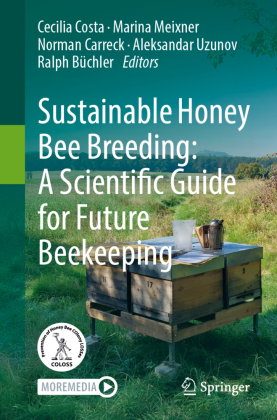
This book is the result of collaborative efforts which have taken place over the past 20 years within the COLOSS network, when the factor bee origin was first put into the equation of factors involved in colony losses. It aims to provide beekeepers, apicultural students, and beekeeping enthusiasts with the scientific background necessary to understand these new ideas, so that future beekeeping may be based on existing local bee genotypes which can then be improved by selective breeding.
The work is divided into two parts. The first section briefly tells the story of honey bees, their origins and their long association with humans, the development of bee breeding and selection and finally the scientific and anecdotal evidence that show that local bees are better for the environment and for beekeeping itself. The second part provides a practical guide to techniques for sustainable bee breeding and selection, ranging from setting up performance testing, to the cost of selection, through methods for rearing queens and making selection decisions, including many aspects related to the control of the very special mating biology of the honey bee.
Authored by an expert team of more than 30 scientists, extension specialists and beekeepers from 16 countries around the world, the present synopsis provides all theoretical and practical aspects of honey bee breeding. It is rich in figures and vivid case studies, including hands-on interviews with bee breeders and other stakeholders. Final, a supplementary video can be accessed online as well as directly from the print book; simply download the free Springer Nature More Media App and scan the link in the accompanying figure caption.