






Diese Website verwendet Cookies und ähnliche Technologien. Dabei handelt es sich um kleine Textdateien, die auf eurem Computer gespeichert und ausgelesen werden. Indem ihr auf "Alles akzeptieren" klickt, stimmt ihr der Verarbeitung von Daten, der Erstellung und Verarbeitung von individuellen Nutzungsprofilen über Websites und über Partner und Geräte hinweg sowie der Übermittlung eurer Daten an Drittanbieter zu, die eure Daten teilweise in Ländern außerhalb der Europäischen Union verarbeiten (GDPR Art. 49). Einzelheiten hierzu findet ihr in den Datenschutzhinweisen. Die Daten werden für Analysen und für eigene Zwecke Dritter verwendet. Weitere Informationen, auch über die Datenverarbeitung durch Drittanbieter und die Möglichkeit des Widerrufs, findet ihr in den Einstellungen und in unseren Datenschutzhinweisen. Hier könnt ihr mit den notwendigen Tools fortfahren.
- Verlag: Penguin Books UK
- Autor: Richard Whatmore
- Artikel-Nr.: KNV97237783
- ISBN: 9780141997704
'A brilliant work of intellectual interpretation by our foremost historian of Enlightenment ideas. Whatmore rescues the Enlightenment from today's circular debates and places it where it belongs: in the pulsing, chaotic era of its genesis and demise' Christopher de Bellaigue
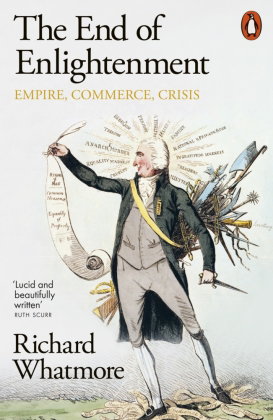
The Enlightenment is popularly seen as the Age of Reason, a key moment in human history when ideals such as freedom, progress, natural rights and constitutional government prevailed. In this radical re-evaluation, historian Richard Whatmore shows why, for many at its centre, the Enlightenment was a profound failure.
By the early eighteenth century, hope was widespread that Enlightenment could be coupled with toleration, the progress of commerce and the end of the fanatic wars of religion that were destroying Europe. At its heart was the battle to establish and maintain liberty in free states - and the hope that absolute monarchies such as France and free states like Britain might even subsist together, equally respectful of civil liberties. Yet all of this collapsed when states pursued wealth and empire by means of war. Xenophobia was rife and liberty itself turned fanatic.
The End of Enlightenment traces the changing perspectives of economists, philosophers, politicians and polemicists around the world, including figures as diverse as David Hume, Adam Smith, Edmund Burke and Mary Wollstonecraft. They had strived to replace superstition with reason, but witnessed instead terror and revolution, corruption, gross commercial excess and the continued growth of violent colonialism.
Returning us to these tumultuous events and ideas, and digging deep into the thought of the men and women who defined their age, Whatmore offers a lucid exploration of disillusion and intellectual transformation, a brilliant meditation on our continued assumptions about the past, and a glimpse of the different ways our world might be structured - especially as the problems addressed at the end of Enlightenment are still with us today.