






Diese Website verwendet Cookies und ähnliche Technologien. Dabei handelt es sich um kleine Textdateien, die auf eurem Computer gespeichert und ausgelesen werden. Indem ihr auf "Alles akzeptieren" klickt, stimmt ihr der Verarbeitung von Daten, der Erstellung und Verarbeitung von individuellen Nutzungsprofilen über Websites und über Partner und Geräte hinweg sowie der Übermittlung eurer Daten an Drittanbieter zu, die eure Daten teilweise in Ländern außerhalb der Europäischen Union verarbeiten (GDPR Art. 49). Einzelheiten hierzu findet ihr in den Datenschutzhinweisen. Die Daten werden für Analysen und für eigene Zwecke Dritter verwendet. Weitere Informationen, auch über die Datenverarbeitung durch Drittanbieter und die Möglichkeit des Widerrufs, findet ihr in den Einstellungen und in unseren Datenschutzhinweisen. Hier könnt ihr mit den notwendigen Tools fortfahren.
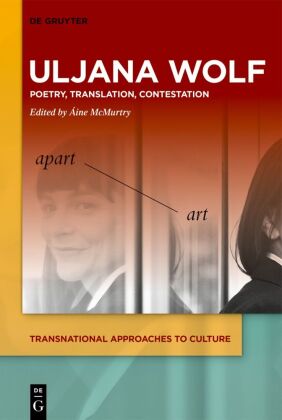
- Verlag: De Gruyter
- Autor: Áine McMurtry
- Artikel-Nr.: KNV98203533
- ISBN: 9783110792997
Against highly current debates on multilingual literary production, this original study of the acclaimed contemporary poet-translator Uljana Wolf considers how lyric verse is being creatively revitalised through experimental practices across languages, genres and media. Based in Berlin and New York, Wolf is concerned to explore and contest political and linguistic borders through poetry and translation as a poetic practice. Despite considerable critical acclaim, Wolf's writing has not yet formed the subject of any book-length study, likely due to its radical form and resistance to straightforward categorisations. This English-language volume will form the first published collection dedicated to Wolf's oeuvre and ensure that her work is made accessible to the increasing numbers of scholars and students working on multilingual literature. Original contributions by Wolf and her translators will consolidate the volume's status as a landmark intervention concerned to trace the aesthetics and politics of Wolf's linguistic and formal experiments. Responding to urgent questions driving comparative literature studies today, our contributors will focus on Wolf's multilingual works, her translational networks and radical textual politics.