






Diese Website verwendet Cookies und ähnliche Technologien. Dabei handelt es sich um kleine Textdateien, die auf eurem Computer gespeichert und ausgelesen werden. Indem ihr auf "Alles akzeptieren" klickt, stimmt ihr der Verarbeitung von Daten, der Erstellung und Verarbeitung von individuellen Nutzungsprofilen über Websites und über Partner und Geräte hinweg sowie der Übermittlung eurer Daten an Drittanbieter zu, die eure Daten teilweise in Ländern außerhalb der Europäischen Union verarbeiten (GDPR Art. 49). Einzelheiten hierzu findet ihr in den Datenschutzhinweisen. Die Daten werden für Analysen und für eigene Zwecke Dritter verwendet. Weitere Informationen, auch über die Datenverarbeitung durch Drittanbieter und die Möglichkeit des Widerrufs, findet ihr in den Einstellungen und in unseren Datenschutzhinweisen. Hier könnt ihr mit den notwendigen Tools fortfahren.
- Verlag: Springer, Berlin
- Autor: Kairi Talves
- Artikel-Nr.: KNV98203204
- ISBN: 9783031955778
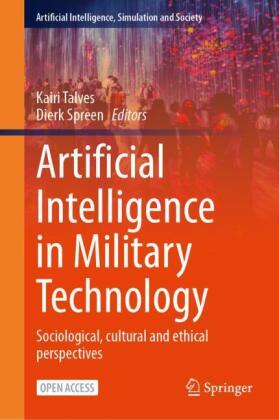
This is an open access book. This volume critically examines challenges in the field of current and future military technology from a transdisciplinary lens. It helps objectify the debate around the development of Lethal Autonomous Weapon Systems (LAWS). The volume offers a differentiated, informed and open approach to military artificial intelligence (AI) applications in the public realm, in politics and in the military itself. The contributions weigh the risks that artificially intelligent automation, like any new technology, brings, against technological innovation and progress. They address the issues of testing new technologies, implementing them socially and reflecting on their use, along with questions of unintended consequences of such technologies. The volume is divided into three parts. The first discusses perspectives on AI; how AI systems are understood by the public, by soldiers, and in cultural discourses. The focus is on (but not limited to) military applications. The second part focuses on the challenges and changes posed by the use of AI in military conflicts and addresses issues of how to deal with them. The third part examines the communication challenges posed by the implementation of AI in the military and the associated opportunities and risks.
This highly topical and timely volume is for researchers and students across disciplines who have an interest in military technology and those interested in AI and new technology.