






Diese Website verwendet Cookies und ähnliche Technologien. Dabei handelt es sich um kleine Textdateien, die auf eurem Computer gespeichert und ausgelesen werden. Indem ihr auf "Alles akzeptieren" klickt, stimmt ihr der Verarbeitung von Daten, der Erstellung und Verarbeitung von individuellen Nutzungsprofilen über Websites und über Partner und Geräte hinweg sowie der Übermittlung eurer Daten an Drittanbieter zu, die eure Daten teilweise in Ländern außerhalb der Europäischen Union verarbeiten (GDPR Art. 49). Einzelheiten hierzu findet ihr in den Datenschutzhinweisen. Die Daten werden für Analysen und für eigene Zwecke Dritter verwendet. Weitere Informationen, auch über die Datenverarbeitung durch Drittanbieter und die Möglichkeit des Widerrufs, findet ihr in den Einstellungen und in unseren Datenschutzhinweisen. Hier könnt ihr mit den notwendigen Tools fortfahren.
- Verlag: Reichert
- Autor: Armin F. Bergmeier
- Artikel-Nr.: KNV98223557
- ISBN: 9783752007725
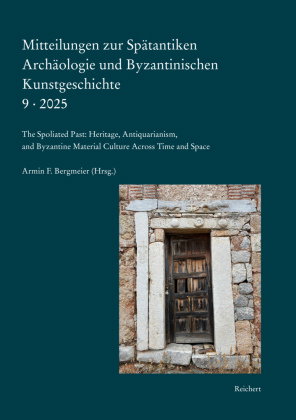
In the absence of textual evidence, art historians and archaeologists often rely on dating artifacts based on an assumed linear development of artistic styles, visual or paleographic forms. This modern predisposition has long hampered our understanding of how people used and referenced the past through stylistic and material spoliation.
The long-standing interest of art historians and archaeologists in spolia resonates with and informs the more recent scholarly focus on cultural heritage. At their core, both spolia and heritage are about acts and processes of the transformation of material and meaning. Cultural heritage studies do not ask what something signified at the moment of inception, but rather how objects and ideas were reshaped, reused, and reinterpreted over time. Spolia - reused and reworked fragments from the past - are material expressions of these same categories and manifestations of transformations over time. Both spolia and heritage trace how the relationship between the past and the present was continually negotiated, how the past was used.