


Diese Website verwendet Cookies und ähnliche Technologien. Dabei handelt es sich um kleine Textdateien, die auf eurem Computer gespeichert und ausgelesen werden. Indem ihr auf "Alles akzeptieren" klickt, stimmt ihr der Verarbeitung von Daten, der Erstellung und Verarbeitung von individuellen Nutzungsprofilen über Websites und über Partner und Geräte hinweg sowie der Übermittlung eurer Daten an Drittanbieter zu, die eure Daten teilweise in Ländern außerhalb der Europäischen Union verarbeiten (GDPR Art. 49). Einzelheiten hierzu findet ihr in den Datenschutzhinweisen. Die Daten werden für Analysen und für eigene Zwecke Dritter verwendet. Weitere Informationen, auch über die Datenverarbeitung durch Drittanbieter und die Möglichkeit des Widerrufs, findet ihr in den Einstellungen und in unseren Datenschutzhinweisen. Hier könnt ihr mit den notwendigen Tools fortfahren.
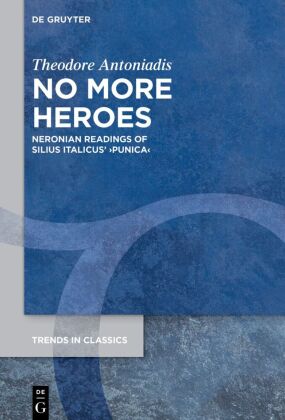
- Verlag: De Gruyter
- Autor: Theodore Antoniadis
- Artikel-Nr.: KNV98230244
- ISBN: 9783119145244
This book offers an alternative reading of Silius Italicus' Punica against the political and literary backdrop of Nero's reign-one of the most underexplored areas in Flavian scholarship. Although Silius is no longer dismissed for his lack of originality or reduced to a nostalgic imitator of Vergil, readers have yet to fully grasp the subtle implications of his self-conscious engagement in a constructive dialogue with the imperial present. As a result, they often misinterpret the Punica as an epic firmly rooted in the Flavian era, overlooking or downplaying Silius' multifaceted "belatedness" as a man who lived under twelve emperors and witnessed firsthand Nero's downfall and its aftermath.
Nevertheless, the primary goal of this monography is not to challenge the "official dating" of the poem's composition-though it does raise legitimate questions about its status as an "exclusive product" of Flavian Rome. Instead, its central premise is that the Punica should not merely be seen as a historical epic linking Rome's distant past to its imperial present but rather as a fundamentally political poem that reflects Silius' "imperial anxieties"-anxieties rooted in Nero's reign and persisting beyond his fall.