






Diese Website verwendet Cookies und ähnliche Technologien. Dabei handelt es sich um kleine Textdateien, die auf eurem Computer gespeichert und ausgelesen werden. Indem ihr auf "Alles akzeptieren" klickt, stimmt ihr der Verarbeitung von Daten, der Erstellung und Verarbeitung von individuellen Nutzungsprofilen über Websites und über Partner und Geräte hinweg sowie der Übermittlung eurer Daten an Drittanbieter zu, die eure Daten teilweise in Ländern außerhalb der Europäischen Union verarbeiten (GDPR Art. 49). Einzelheiten hierzu findet ihr in den Datenschutzhinweisen. Die Daten werden für Analysen und für eigene Zwecke Dritter verwendet. Weitere Informationen, auch über die Datenverarbeitung durch Drittanbieter und die Möglichkeit des Widerrufs, findet ihr in den Einstellungen und in unseren Datenschutzhinweisen. Hier könnt ihr mit den notwendigen Tools fortfahren.
- Verlag: Park Books
- Autor: Caroline Wohlgemuth
- Artikel-Nr.: KNV98230092
- ISBN: 9783038604464
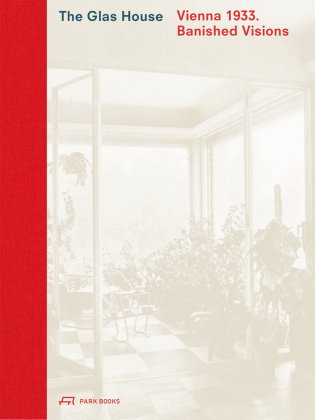
In 1933, when Hans Glas designed the villa for physicians Annie and Philipp Rezek on Wilbrandtgasse in Vienna, in the Austrian capital's 18th district, it was one of the city's most visionary buildings of its kind. The "Glas House," as the Rezek family called their home, is a quintessential example of modern architecture and the associated philosophy of living in 1930s Vienna. Viennese architect Hans Glas (1892-1969), a student of Adolf Loos, has today largely fallen into oblivion in Austria.
This book describes the Villa Rezek in detail, illustrated with numerous historical and new photographs by Stefan Oláh, plans, and historic documents. It also sheds light on entirely novel aspects of Vienna's architectural history of the 1930s and tells the stories of both the architect and his clients, all of whom were forced to emigrate due to their Jewish heritage following the annexation of Austria by Nazi Germany in 1938.
The Rezek family fled to the US. Hans Glas went to Calcutta, where he was able to successfully continue his career as an architect. Forced emigrations like these not only implied human tragedies. 1938 also brought an abrupt end to the flourishing of Vienna's modern architecture and living culture. Yet Glas's ideas and design principles are more relevant today than ever.