






Diese Website verwendet Cookies und ähnliche Technologien. Dabei handelt es sich um kleine Textdateien, die auf eurem Computer gespeichert und ausgelesen werden. Indem ihr auf "Alles akzeptieren" klickt, stimmt ihr der Verarbeitung von Daten, der Erstellung und Verarbeitung von individuellen Nutzungsprofilen über Websites und über Partner und Geräte hinweg sowie der Übermittlung eurer Daten an Drittanbieter zu, die eure Daten teilweise in Ländern außerhalb der Europäischen Union verarbeiten (GDPR Art. 49). Einzelheiten hierzu findet ihr in den Datenschutzhinweisen. Die Daten werden für Analysen und für eigene Zwecke Dritter verwendet. Weitere Informationen, auch über die Datenverarbeitung durch Drittanbieter und die Möglichkeit des Widerrufs, findet ihr in den Einstellungen und in unseren Datenschutzhinweisen. Hier könnt ihr mit den notwendigen Tools fortfahren.
- Verlag: De Gruyter
- Autor: Thierry Meyer
- Artikel-Nr.: KNV98230218
- ISBN: 9783111490588
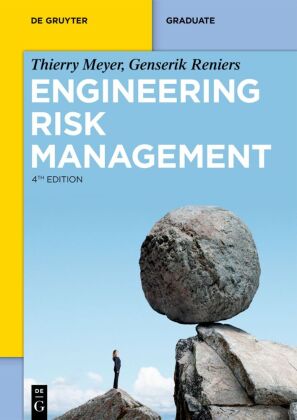
This revised and updated 4th edition of Engineering Risk Management (ERM) presents an understanding and insights into what risk is, what it constitutes, and how to interpret the building blocks of the concept. It promotes a culture of risk awareness and integrating risk management principles and practices into the educational environment. This is essential to ensure that students have the knowledge and skills to identify hazards and assess and control risks in different contexts through the development and implementation of a risk management curriculum.
The book also elaborates on the differences between safety and security, and risk management metaphors. Models, theories and principles are discussed, as well as risk assessment methods, risk treatment, risk resilience and micro-economic approaches to optimizing risk decision-making. Some iconic major accidents are explained, followed by examples of practical implementation of ERM in chemistry, physics, and nanotechnology.
Overall, the interface between risk management and education is essential to develop a generation of professionals who can effectively deal with risks in a variety of contexts. By integrating risk management principles and practices into the educational process, educational institutions can help ensure, that their students are well prepared to meet the challenges of the modern world.