






Diese Website verwendet Cookies und ähnliche Technologien. Dabei handelt es sich um kleine Textdateien, die auf eurem Computer gespeichert und ausgelesen werden. Indem ihr auf "Alles akzeptieren" klickt, stimmt ihr der Verarbeitung von Daten, der Erstellung und Verarbeitung von individuellen Nutzungsprofilen über Websites und über Partner und Geräte hinweg sowie der Übermittlung eurer Daten an Drittanbieter zu, die eure Daten teilweise in Ländern außerhalb der Europäischen Union verarbeiten (GDPR Art. 49). Einzelheiten hierzu findet ihr in den Datenschutzhinweisen. Die Daten werden für Analysen und für eigene Zwecke Dritter verwendet. Weitere Informationen, auch über die Datenverarbeitung durch Drittanbieter und die Möglichkeit des Widerrufs, findet ihr in den Einstellungen und in unseren Datenschutzhinweisen. Hier könnt ihr mit den notwendigen Tools fortfahren.
- Verlag: Scheidegger & Spiess
- Autor: Michael Hiltbrunner
- Artikel-Nr.: KNV98237152
- ISBN: 9783039422876
Zurich's Shedhalle is a space for process-based art on the city's lakeshore. It was originally part of a former textile mill that was converted first into an assembly plant for telephones and radios, and in the early 1980s into a campus known as the Rote Fabrik (the red factory), hosting a theater and concert hall, a restaurant and bar, studios for visual and performing artists, and art spaces. Since its inception in 1985, the Shedhalle has been a place where independent artists, communities, and activists come together and work. New exhibition formats, as well as artistic practices and forms of knowledge generation, have evolved here, often ahead of their time. They reflect different emancipatory and socio-critical concerns of their respective times.
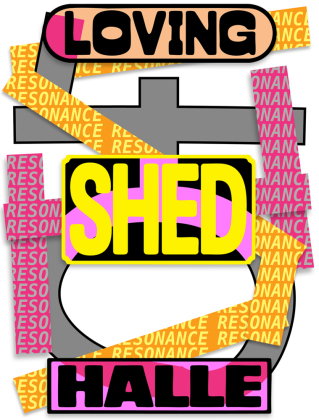
Loving Shedhalle marks the venue's 40th anniversary. It reflects on its history, artistic and curatorial strategies, and social resonance chambers, and explores the concerns negotiated here over all these years. The book's title reflects the idea of love as an affective practice: causes are deeply interwoven with emotions, convictions, and decisions. At the Shedhalle, strategies and formats unfolded that aimed at making art effective beyond art itself.
The volume brings together voices from people involved with Shedhalle in various manners and roles, from the early days until the present. It highlights the place's visionary potential of four decades and explores how the presence is moved by echoes of the past that continue to give artistic, curatorial, and sociopolitical impulses.