






Diese Website verwendet Cookies und ähnliche Technologien. Dabei handelt es sich um kleine Textdateien, die auf eurem Computer gespeichert und ausgelesen werden. Indem ihr auf "Alles akzeptieren" klickt, stimmt ihr der Verarbeitung von Daten, der Erstellung und Verarbeitung von individuellen Nutzungsprofilen über Websites und über Partner und Geräte hinweg sowie der Übermittlung eurer Daten an Drittanbieter zu, die eure Daten teilweise in Ländern außerhalb der Europäischen Union verarbeiten (GDPR Art. 49). Einzelheiten hierzu findet ihr in den Datenschutzhinweisen. Die Daten werden für Analysen und für eigene Zwecke Dritter verwendet. Weitere Informationen, auch über die Datenverarbeitung durch Drittanbieter und die Möglichkeit des Widerrufs, findet ihr in den Einstellungen und in unseren Datenschutzhinweisen. Hier könnt ihr mit den notwendigen Tools fortfahren.
- Verlag: De Gruyter
- Autor: Ilja Nieuwland
- Artikel-Nr.: KNV98302480
- ISBN: 9783119148634
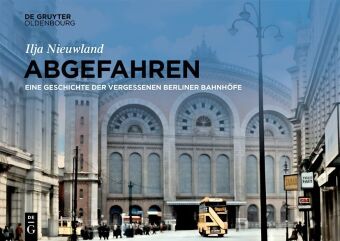
From the birth of Berlin's railway network to the time when the bombs of the Second World War and the concrete slabs of the Wall changed the city forever, the Prussian and later German capital counted eight major railway stations. These were beacons in the city: impressive monuments, magnificently built for the bygone rituals of arrival and departure, yet tightly woven into a distinct part of town.
Railway stations are magical, meaningful places, allowing for escape as well as promise, nostalgia as well as novelty. They process all sorts of people, from well-to-do business types to unfortunates forced to live on the fringes of society. There is a nervous energy around them, created by those looking forward to their journey, others trying to get oriented in a place that is new to them, and some facing the drudgery of yet another commute.
And if pre-World War 2 Berlin was anything, it was energetic. Building an adequate transport infrastructure for Europe's fastest-growing city proved to be a continuous challenge that required flexibility and adaptation and touched the city in ways that can still be seen today. This is the history of Berlin's railway stations, the people that used them, and the way the city was shaped by them.