






Diese Website verwendet Cookies und ähnliche Technologien. Dabei handelt es sich um kleine Textdateien, die auf eurem Computer gespeichert und ausgelesen werden. Indem ihr auf "Alles akzeptieren" klickt, stimmt ihr der Verarbeitung von Daten, der Erstellung und Verarbeitung von individuellen Nutzungsprofilen über Websites und über Partner und Geräte hinweg sowie der Übermittlung eurer Daten an Drittanbieter zu, die eure Daten teilweise in Ländern außerhalb der Europäischen Union verarbeiten (GDPR Art. 49). Einzelheiten hierzu findet ihr in den Datenschutzhinweisen. Die Daten werden für Analysen und für eigene Zwecke Dritter verwendet. Weitere Informationen, auch über die Datenverarbeitung durch Drittanbieter und die Möglichkeit des Widerrufs, findet ihr in den Einstellungen und in unseren Datenschutzhinweisen. Hier könnt ihr mit den notwendigen Tools fortfahren.
- Verlag: Reichert
- Autor: Elsa Campbell
- Artikel-Nr.: KNV98434748
- ISBN: 9783752008876
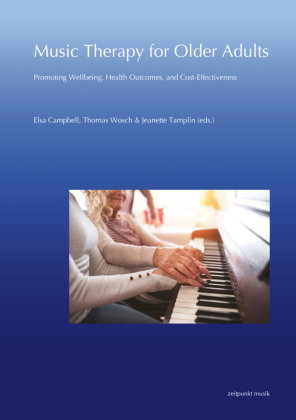
Resulting from the international MUSE-CARE project (Music Empowerment of Caregivers) and funded by the DAAD-PPP Australia programme (German Academic Exchange Service; Federal Ministry of Education and Research; Universities Australia), this unique volume showcases a rich partnership between German and Australian experts. Each chapter pairs authors from both countries writing on one main outcome, highlighting a global and interdisciplinary perspective on dementia care.
The dual focus of the book sets it apart: it not only introduces cutting-edge research and practical approaches, but also traces the academic journeys of the early-career researchers involved. From doctoral theses to post-doctoral work and tenure-track positions, the chapters reflect a dynamic and evolving field shaped by sustained international collaboration with professors and experts in the field.
Covering a range of disciplines including music therapy, geriatric nursing, geriatric psychiatry, health economics, nursing science, and (music) geragogy, this collection introduces innovative interventions. These are delivered by trained music therapists or as music therapy-informed strategies delivered by formal and informal caregivers. The chapters are tailored to diverse audiences and cover various fields, highlighting the span of the field: Music therapists and healthcare professionals will find evidence-based frameworks for interventions, including insights related to the various stages of dementia; policy-makers and healthcare administrators will benefit from models and analyses of cost-effectiveness and implications for healthcare systems; researchers and students of music therapy, nursing science, and related fields will appreciate the methodological reflections and real-world applications and impact of interdisciplinary research; formal and informal caregivers will discover adaptable, music-based strategies suitable for home and institutional settings. Finally, all chapters encapsulate the intercultural aspects and differences in interventions and models.
This book contributes meaningfully to a broader discourse on gerontology and dementia care. It emphasises the flexibility, empathy, and empowerment of people with dementia and their caregivers, offering a compelling vision of how music can connect and support across professions, generations, and cultures, thereby improving care and quality of life for older adults around the world.