






Diese Website verwendet Cookies und ähnliche Technologien. Dabei handelt es sich um kleine Textdateien, die auf eurem Computer gespeichert und ausgelesen werden. Indem ihr auf "Alles akzeptieren" klickt, stimmt ihr der Verarbeitung von Daten, der Erstellung und Verarbeitung von individuellen Nutzungsprofilen über Websites und über Partner und Geräte hinweg sowie der Übermittlung eurer Daten an Drittanbieter zu, die eure Daten teilweise in Ländern außerhalb der Europäischen Union verarbeiten (GDPR Art. 49). Einzelheiten hierzu findet ihr in den Datenschutzhinweisen. Die Daten werden für Analysen und für eigene Zwecke Dritter verwendet. Weitere Informationen, auch über die Datenverarbeitung durch Drittanbieter und die Möglichkeit des Widerrufs, findet ihr in den Einstellungen und in unseren Datenschutzhinweisen. Hier könnt ihr mit den notwendigen Tools fortfahren.
- Verlag: Springer, Berlin
- Autor: Leila Papoli-Yazdi
- Artikel-Nr.: KNV98510027
- ISBN: 9783032034304
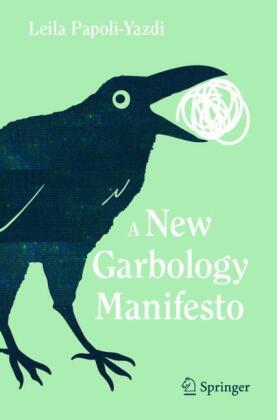
This book offers an updated version of Garbology (Archaeology of Garbage), a subfield of archaeology that critically examines modern waste and consumerism. It weaves academic rigor with the author's personal narratives and experiences in the field. The work contains facts and evidence from multiple communities and considers the author's journey from being a politically marginalized professor in Iran to co-founding a garbology-centered startup in Sweden.
This perspective offers a compelling narrative, accessible not just to scholars but to anyone seeking a new way to explore and discuss modern civilization's wicked problems. What distinguishes this work is its practical approach: it not only critiques consumer behaviors but also offers actionable solutions through an archaeological lens. With detailed case studies, the author positions garbology as a transformative tool for grassroots activism and social change. Ultimately, A New Garbology Manifesto serves as a powerful call to action, highlighting the deep connections between waste, socio-economic inequality, and environmental justice. It equips scholars, policymakers, and NGOs with practical strategies to tackle hyperconsumerism and climate challenges across both the Global South and North.