






Diese Website verwendet Cookies und ähnliche Technologien. Dabei handelt es sich um kleine Textdateien, die auf eurem Computer gespeichert und ausgelesen werden. Indem ihr auf "Alles akzeptieren" klickt, stimmt ihr der Verarbeitung von Daten, der Erstellung und Verarbeitung von individuellen Nutzungsprofilen über Websites und über Partner und Geräte hinweg sowie der Übermittlung eurer Daten an Drittanbieter zu, die eure Daten teilweise in Ländern außerhalb der Europäischen Union verarbeiten (GDPR Art. 49). Einzelheiten hierzu findet ihr in den Datenschutzhinweisen. Die Daten werden für Analysen und für eigene Zwecke Dritter verwendet. Weitere Informationen, auch über die Datenverarbeitung durch Drittanbieter und die Möglichkeit des Widerrufs, findet ihr in den Einstellungen und in unseren Datenschutzhinweisen. Hier könnt ihr mit den notwendigen Tools fortfahren.
- Verlag: Springer, Berlin
- Autor: Reem Khamis Hamdan
- Artikel-Nr.: KNV98525994
- ISBN: 9783031509414
The impact of artificial intelligence (AI) on business and society has been significant, with the incorporation of AI technologies such as robots, facial recognition, algorithms, and natural language processing into business leading to both corporate benefits and potential challenges for stakeholders. The question of how to engage in responsible business practices in the era of AI is an important one, and there is a need for more research on the relationship between AI and corporate social responsibility (CSR). As AI becomes more prevalent, there is a growing focus on the ethical implications of AI and the potential for AI to perpetuate biases or to displace human workers. CSR initiatives can include considerations of ethical AI in the development and use of AI systems. AI has the potential to solve many global challenges and improve people's lives, but it can also have negative consequences if not developed and used responsibly. CSR initiatives can focus on the social impact of AI,including efforts to ensure that the benefits of AI are distributed fairly and that AI is used for the common good. CSR initiatives often involve engaging with stakeholders, including employees, customers, and communities, to understand their needs and concerns and to ensure that their interests are taken into account. This can include engaging with stakeholders about the use of AI in the organization and its potential impacts
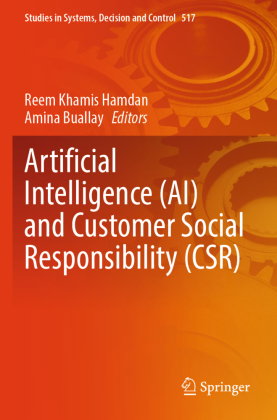
The adoption of AI in business is changing many aspects of doing business in a socially responsible manner, and there is a need to examine the potential unethical behaviors and novel ways of engaging in CSR that may arise. This book aims to focus on AI and CSR, and to advance our understanding of the role of AI in organizations and the literature on CSR by assembling high-quality papers with a strong connection between theory and practice.