






Diese Website verwendet Cookies und ähnliche Technologien. Dabei handelt es sich um kleine Textdateien, die auf eurem Computer gespeichert und ausgelesen werden. Indem ihr auf "Alles akzeptieren" klickt, stimmt ihr der Verarbeitung von Daten, der Erstellung und Verarbeitung von individuellen Nutzungsprofilen über Websites und über Partner und Geräte hinweg sowie der Übermittlung eurer Daten an Drittanbieter zu, die eure Daten teilweise in Ländern außerhalb der Europäischen Union verarbeiten (GDPR Art. 49). Einzelheiten hierzu findet ihr in den Datenschutzhinweisen. Die Daten werden für Analysen und für eigene Zwecke Dritter verwendet. Weitere Informationen, auch über die Datenverarbeitung durch Drittanbieter und die Möglichkeit des Widerrufs, findet ihr in den Einstellungen und in unseren Datenschutzhinweisen. Hier könnt ihr mit den notwendigen Tools fortfahren.
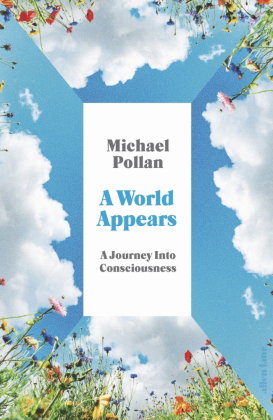
- Verlag: Penguin Books UK
- Autor: Michael Pollan
- Artikel-Nr.: KNV10046281
- ISBN: 9780241509470
A NEW YORK TIMES BESTSELLER
A BARACK OBAMA 2026 SUMMER READING LIST PICK
'Big, generous, illuminating and beautifully written' John Banville, Financial Times
From the best-selling author of How to Change Your Mind, a pioneering search for consciousness in the brain and beyond
A World Appears is the story of the quest to solve the greatest mystery in nature: consciousness. How does it feel to be you with your own personal feelings, thoughts and experiences? Every one of us is intimately familiar with consciousness, but no one knows how - or why - it came to be that three pounds of grey matter can generate a subjective point of view.
The early 1990s marked the birth of a new science of consciousness, based on the assumption that the phenomenon could be explained in terms of brain activity, but that effort is faltering, and wilder ideas, such as panpsychism, are now getting a hearing. Indeed, there is now reason to doubt that 'objective science' as we have known it since Galileo has the right tools to plumb first-person experience. A World Appears takes Michael Pollan from the laboratories where scientists are searching for the neural correlates of consciousness to encounters with philosophers and novelists and Buddhist monks, whom he finds have just as much to teach us about consciousness, if not more.
A story that begins in a brain lab in Seattle ends, of all places, in a cave in the mountains of New Mexico, where the author discovers that explaining consciousness may be less urgent than learning to practice it in our everyday lives.