






Diese Website verwendet Cookies und ähnliche Technologien. Dabei handelt es sich um kleine Textdateien, die auf eurem Computer gespeichert und ausgelesen werden. Indem ihr auf "Alles akzeptieren" klickt, stimmt ihr der Verarbeitung von Daten, der Erstellung und Verarbeitung von individuellen Nutzungsprofilen über Websites und über Partner und Geräte hinweg sowie der Übermittlung eurer Daten an Drittanbieter zu, die eure Daten teilweise in Ländern außerhalb der Europäischen Union verarbeiten (GDPR Art. 49). Einzelheiten hierzu findet ihr in den Datenschutzhinweisen. Die Daten werden für Analysen und für eigene Zwecke Dritter verwendet. Weitere Informationen, auch über die Datenverarbeitung durch Drittanbieter und die Möglichkeit des Widerrufs, findet ihr in den Einstellungen und in unseren Datenschutzhinweisen. Hier könnt ihr mit den notwendigen Tools fortfahren.
- Verlag: Springer, Berlin
- Autor: Volker Wohlgemuth
- Artikel-Nr.: KNV10459218
- ISBN: 9783032227256
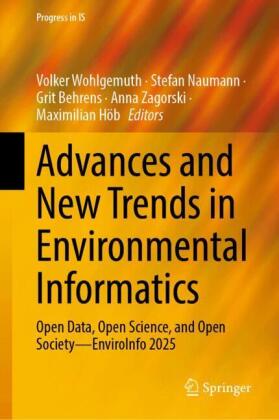
This book presents selected papers from the 39th International Conference EnviroInfo 2025, held at the University of Potsdam, Germany, September 17th-19th, 2025. It explores the latest advancements in applied informatics, environmental informatics, and relevant sustainability practices with a special focus on the topic "Open Data, Open Science, and Open Society. The conference s goal is to promote collaboration, transparency, and inclusivity in addressing global challenges in the areas of green computing, sustainable software engineering, circular economy and business intelligence. As such, the papers presented here cover essential elements of shaping a greener future while also highlighting the transformative power of digital tools and data-driven strategies in addressing environmental problems that transcend geopolitical boundaries.
From climate change and biodiversity loss to water scarcity and pollution, the book examines how digital inclusion can empower communities, enhance decision-making, and promote sustainable development on a global scale. It also explores the societal aspects of environmental informatics, including environmental informatics, e.g. in developing countries. As an essential resource for researchers, professionals, and policymakers interested in leveraging ICT to address pressing environmental challenges and achieve sustainable development, it offers valuable insights, thought-provoking discussions, and innovative approaches to creating a sustainable and eco-friendly digital society in keeping the global sustainable development goals.