






Diese Website verwendet Cookies und ähnliche Technologien. Dabei handelt es sich um kleine Textdateien, die auf eurem Computer gespeichert und ausgelesen werden. Indem ihr auf "Alles akzeptieren" klickt, stimmt ihr der Verarbeitung von Daten, der Erstellung und Verarbeitung von individuellen Nutzungsprofilen über Websites und über Partner und Geräte hinweg sowie der Übermittlung eurer Daten an Drittanbieter zu, die eure Daten teilweise in Ländern außerhalb der Europäischen Union verarbeiten (GDPR Art. 49). Einzelheiten hierzu findet ihr in den Datenschutzhinweisen. Die Daten werden für Analysen und für eigene Zwecke Dritter verwendet. Weitere Informationen, auch über die Datenverarbeitung durch Drittanbieter und die Möglichkeit des Widerrufs, findet ihr in den Einstellungen und in unseren Datenschutzhinweisen. Hier könnt ihr mit den notwendigen Tools fortfahren.
- Verlag: Evangelische Verlagsanstalt
- Autor: Hendrik Klinge
- Artikel-Nr.: KNV10236679
- ISBN: 9783374080151
Mit Beiträgen von Beims, Klaus-Dieter, Graßmann, Tobias, Jammerthal, Tobias, Klinge, Hendrik, Michel, Stefan, Milde, Jonas, Pfuch, Tilman, Reitzner, Jan, Röser-Israel, Lars, Schmidt, Steffie, Voigt-Goy, Christopher und Christian Volkmar Witt.
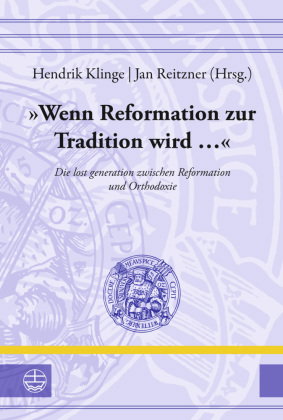
[»When Reformation Becomes Tradition ...«. The Lost Generation between Reformation and Orthodoxy]
When does the Reformation itself become tradition? Or: How does Luther's theology become »Lutheran« theology? These questions arise with great urgency in the period between the anniversary years 2017 and 2030. The conference on which this volume is based, held on the occasion of the 500th birthday of Martin Chemnitz, attempts to emphasise the plurality and dynamism of those processes, as well as to highlight the Reformation heritage in its entirety for systematic reasons. First, Martin Chemnitz is analysed as an example; second, the relationship between the Reformation and tradition among his contemporaries is examined; third, hymns and sermons are studied as exemplary practices of the time; and finally, the book concludes with overarching perspectives on the history of theology. The hope associated with this volume is that the »lost generation« will not become a forgotten generation, but that awareness will be raised of how a tradition emerged from the dawn of the Reformation itself.