






Diese Website verwendet Cookies und ähnliche Technologien. Dabei handelt es sich um kleine Textdateien, die auf eurem Computer gespeichert und ausgelesen werden. Indem ihr auf "Alles akzeptieren" klickt, stimmt ihr der Verarbeitung von Daten, der Erstellung und Verarbeitung von individuellen Nutzungsprofilen über Websites und über Partner und Geräte hinweg sowie der Übermittlung eurer Daten an Drittanbieter zu, die eure Daten teilweise in Ländern außerhalb der Europäischen Union verarbeiten (GDPR Art. 49). Einzelheiten hierzu findet ihr in den Datenschutzhinweisen. Die Daten werden für Analysen und für eigene Zwecke Dritter verwendet. Weitere Informationen, auch über die Datenverarbeitung durch Drittanbieter und die Möglichkeit des Widerrufs, findet ihr in den Einstellungen und in unseren Datenschutzhinweisen. Hier könnt ihr mit den notwendigen Tools fortfahren.
- Verlag: Franz Steiner Verlag
- Autor: Rubina Raja
- Artikel-Nr.: KNV98628519
- ISBN: 9783515140218
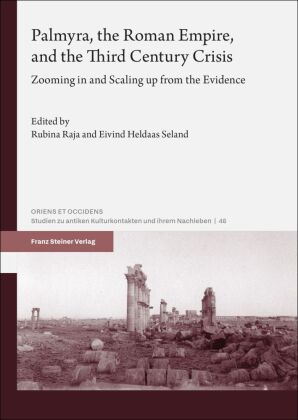
The third century is often seen as a period of crisis in the Roman world, marked by political upheaval, violence, war, religious strife, hyperinflation, climatic instability, pandemics, and border incursions. These troubled times, however, coincided with the peak of Palmyra's prosperity. They encompassed the Syrian city's drift towards centralised rulership and short-lived political hegemony in the Near East, as well as its reach for imperial power and downfall in the years 270-272 CE.
How can this discrepancy between metropolitan crisis and peripheral prosperity be explained? Along with experts on different aspects of Palmyra, this volume gathers contributions from leading scholars working with the Roman Empire, and with neighbouring regions inside and beyond the imperial borders. Highlighting parallels, discrepancies, connections, and disconnections between developments in Palmyra and other parts of the world with which Palmyra interacted, the aim is a more critical, detailed, and nuanced understanding of the situation in the Roman Near East in the third century CE.