






Diese Website verwendet Cookies und ähnliche Technologien. Dabei handelt es sich um kleine Textdateien, die auf eurem Computer gespeichert und ausgelesen werden. Indem ihr auf "Alles akzeptieren" klickt, stimmt ihr der Verarbeitung von Daten, der Erstellung und Verarbeitung von individuellen Nutzungsprofilen über Websites und über Partner und Geräte hinweg sowie der Übermittlung eurer Daten an Drittanbieter zu, die eure Daten teilweise in Ländern außerhalb der Europäischen Union verarbeiten (GDPR Art. 49). Einzelheiten hierzu findet ihr in den Datenschutzhinweisen. Die Daten werden für Analysen und für eigene Zwecke Dritter verwendet. Weitere Informationen, auch über die Datenverarbeitung durch Drittanbieter und die Möglichkeit des Widerrufs, findet ihr in den Einstellungen und in unseren Datenschutzhinweisen. Hier könnt ihr mit den notwendigen Tools fortfahren.
- Verlag: Penguin Books UK
- Autor: Serhii Plokhy
- Artikel-Nr.: KNV10046328
- ISBN: 9781802060607
'Few historians write with Serhii Plokhy's authority, clarity or global vision... Essential reading, and a marvellous book' Peter Frankopan
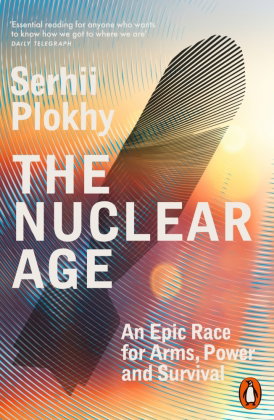
From the bestselling author of Chernobyl comes a sweeping history of the geopolitics behind the nuclear arms race, from the first atomic bomb to today
On 16 July 1945, the Nuclear Age began with the explosion of the first atomic bomb and the words of J. Robert Oppenheimer: 'Now I am become Death, the Destroyer of Worlds.'
While the threat of mutually assured destruction kept a lid on a simmering and tense geopolitical landscape, events like the Chernobyl disaster and near-misses like the Cuban Missile Crisis showed that total destruction was only ever one malfunction, mistake, or miscommunication away. Now, as governments re-arm their nuclear arsenals, treaties designed to limit the acquisition and use of nuclear weapons fall away, and nuclear weapons come increasingly within reach of non-state actors, we are on the brink of a renaissance of the nuclear industry.
In The Nuclear Age, acclaimed historian Serhii Plokhy paints an intricate picture of a world governed by fear. From the first artificial splitting of the atom in 1917 and the race to create the first atomic bomb in World War II, through the fraught arms race of the Cold War, to the imperialism, neo-colonial motivation and wars being waged today, the threat posed by nuclear weapons is as pertinent as ever.
As he examines the motivations of key players, Plokhy confronts the crucial question of our age: what can we learn from the first nuclear arms race that can help us to stop the new one?