






Diese Website verwendet Cookies und ähnliche Technologien. Dabei handelt es sich um kleine Textdateien, die auf eurem Computer gespeichert und ausgelesen werden. Indem ihr auf "Alles akzeptieren" klickt, stimmt ihr der Verarbeitung von Daten, der Erstellung und Verarbeitung von individuellen Nutzungsprofilen über Websites und über Partner und Geräte hinweg sowie der Übermittlung eurer Daten an Drittanbieter zu, die eure Daten teilweise in Ländern außerhalb der Europäischen Union verarbeiten (GDPR Art. 49). Einzelheiten hierzu findet ihr in den Datenschutzhinweisen. Die Daten werden für Analysen und für eigene Zwecke Dritter verwendet. Weitere Informationen, auch über die Datenverarbeitung durch Drittanbieter und die Möglichkeit des Widerrufs, findet ihr in den Einstellungen und in unseren Datenschutzhinweisen. Hier könnt ihr mit den notwendigen Tools fortfahren.
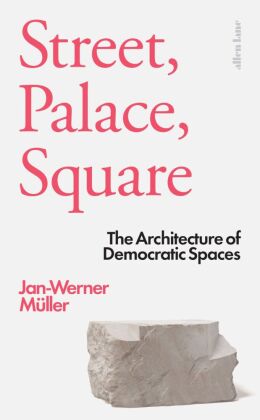
- Verlag: Penguin Books UK
- Autor: Jan-Werner Müller
- Artikel-Nr.: KNV10046279
- ISBN: 9780241382035
Can architecture ever be democratic? An elegant, timely new theory of politics and urban design from the acclaimed author of What is Populism? and Democracy Rules
Building requires power and resources - then, once created, our environment structures how we relate to each other. But what would a distinctly democratic built environment look like? Should we prioritize an inclusive process by which as many citizens as possible can decide how a building is designed? Or is it about how architecture and urban spaces can best represent democracy to citizens - and how building and city planning can concretely facilitate democratic action by citizens?
In Street, Palace, Square, political theorist Jan-Werner Müller offers an elegant new account of architecture and democracy that draws on examples from Washington DC to Dhaka, Cairo to Berlin. Ranging widely across political philosophy, history and design, he shows that bringing architecture and democracy together has an unexpected benefit.
As we reflect on spaces and symbols on the one hand and our understandings of democracy on the other, we might see possibilities we did not see before: how to create spaces for citizens to make politics their own.