






Diese Website verwendet Cookies und ähnliche Technologien. Dabei handelt es sich um kleine Textdateien, die auf eurem Computer gespeichert und ausgelesen werden. Indem ihr auf "Alles akzeptieren" klickt, stimmt ihr der Verarbeitung von Daten, der Erstellung und Verarbeitung von individuellen Nutzungsprofilen über Websites und über Partner und Geräte hinweg sowie der Übermittlung eurer Daten an Drittanbieter zu, die eure Daten teilweise in Ländern außerhalb der Europäischen Union verarbeiten (GDPR Art. 49). Einzelheiten hierzu findet ihr in den Datenschutzhinweisen. Die Daten werden für Analysen und für eigene Zwecke Dritter verwendet. Weitere Informationen, auch über die Datenverarbeitung durch Drittanbieter und die Möglichkeit des Widerrufs, findet ihr in den Einstellungen und in unseren Datenschutzhinweisen. Hier könnt ihr mit den notwendigen Tools fortfahren.
- Verlag: Penguin Books UK
- Autor: Mariana Mazzucato
- Artikel-Nr.: KNV10046300
- ISBN: 9780241722244
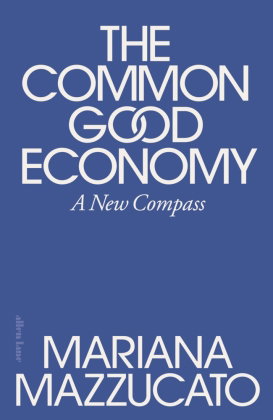
The world-leading economist envisions a 'common good compass' to help navigate our economies in a radically different direction - one that works for everyone
Our economic system is broken. The climate crisis is accelerating. Inequality is deepening. Public trust is crumbling. Wealth concentrates in fewer hands while governments scramble to fix what markets can't do, rather than to shape them from the outset.
For too long, economics has treated 'the good' - whether public goods or the commons - as merely correcting market or government failures. This economic framing traps us in an endless cycle of being reactive, patching problems rather than proactively building the economy we need.
In The Common Good Economy, Mariana Mazzucato builds on her visionary ideas of the entrepreneurial state and mission-oriented policies to establish a new theory of the common good, one which allows governments and businesses to develop purposeful economic relationships, creating value and building spaces where human flourishing can happen. She argues that how we achieve collective goals - through collective action, participation and reciprocity - matters as much as what those goals are. The book provides a practical 'common good compass' to help navigate our economies in a radically different direction.
Full of compelling real-world examples, from governing water to transforming procurement and finance, this is a rigorous reimagining of economics and a manifesto for a future economy that serves people and the planet. It could not be more timely.