






Diese Website verwendet Cookies und ähnliche Technologien. Dabei handelt es sich um kleine Textdateien, die auf eurem Computer gespeichert und ausgelesen werden. Indem ihr auf "Alles akzeptieren" klickt, stimmt ihr der Verarbeitung von Daten, der Erstellung und Verarbeitung von individuellen Nutzungsprofilen über Websites und über Partner und Geräte hinweg sowie der Übermittlung eurer Daten an Drittanbieter zu, die eure Daten teilweise in Ländern außerhalb der Europäischen Union verarbeiten (GDPR Art. 49). Einzelheiten hierzu findet ihr in den Datenschutzhinweisen. Die Daten werden für Analysen und für eigene Zwecke Dritter verwendet. Weitere Informationen, auch über die Datenverarbeitung durch Drittanbieter und die Möglichkeit des Widerrufs, findet ihr in den Einstellungen und in unseren Datenschutzhinweisen. Hier könnt ihr mit den notwendigen Tools fortfahren.
- Verlag: Taylor & Francis
- Autor: Kimberley Peters
- Artikel-Nr.: KNV99273906
- ISBN: 9781032259208
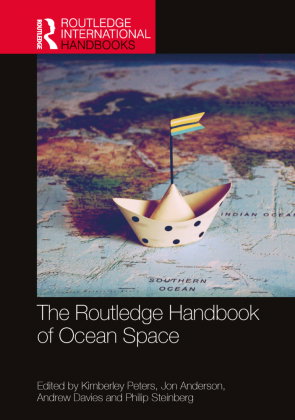
Invisible as the seas and oceans may be for so many of us, life as we know it is almost always connected to, and constituted by, activities and occurrences that take place in, on and under our oceans. The Routledge Handbook of Ocean Space provides a first port of call for scholars engaging in the 'oceanic turn' in the social sciences, offering a comprehensive summary of existing trends in making sense of our water worlds, alongside new, agenda-setting insights into the relationships between society and the 'seas around us'. Accordingly, this ambitious text not only attends to a growing interest in our oceans, past and present; it is also situated in a broader spatial turn across the social sciences that seeks to account for how space and place are imbricated in socio-cultural and political life.
Through six clearly structured and wide-ranging sections, The Routledge Handbook of Ocean Space examines and interrogates how the oceans are environmental, historical, social, cultural, political, legal and economic spaces, and also zones where national and international security comes into question. With a foreword and introduction authored by some of the leading scholars researching and writing about ocean spaces, alongside 31 further, carefully crafted chapters from established as well as early career academics, this book provides both an accessible guide to the subject and a cutting-edge collection of critical ideas and questions shaping the social sciences today.
This handbook brings together the key debates defining the 'field' in one volume, appealing to a wide, cross-disciplinary social science and humanities audience. Moreover, drawing on a range of international examples, from a global collective of authors, this book promises to be the benchmark publication for those interested in ocean spaces, past and present. Indeed, as the seas and oceans continue to capture world-wide attention, and the social sciences continue their seaward 'turn', The Routledge Handbook of Ocean Space will provide an invaluable resource that reveals how our world is a water world.