


Diese Website verwendet Cookies und ähnliche Technologien. Dabei handelt es sich um kleine Textdateien, die auf eurem Computer gespeichert und ausgelesen werden. Indem ihr auf "Alles akzeptieren" klickt, stimmt ihr der Verarbeitung von Daten, der Erstellung und Verarbeitung von individuellen Nutzungsprofilen über Websites und über Partner und Geräte hinweg sowie der Übermittlung eurer Daten an Drittanbieter zu, die eure Daten teilweise in Ländern außerhalb der Europäischen Union verarbeiten (GDPR Art. 49). Einzelheiten hierzu findet ihr in den Datenschutzhinweisen. Die Daten werden für Analysen und für eigene Zwecke Dritter verwendet. Weitere Informationen, auch über die Datenverarbeitung durch Drittanbieter und die Möglichkeit des Widerrufs, findet ihr in den Einstellungen und in unseren Datenschutzhinweisen. Hier könnt ihr mit den notwendigen Tools fortfahren.
- Verlag: De Gruyter
- Autor: Przemyslaw Marciniak
- Artikel-Nr.: KNV10459345
- ISBN: 9783111424729
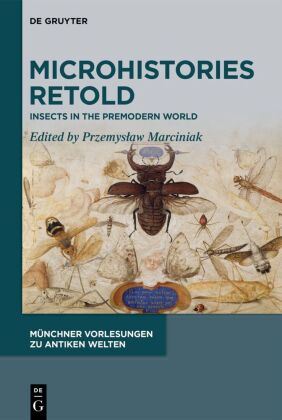
Insects provide a distinctive lens through which to explore premodern conceptions of the natural world. Often perceived as unchanging across time and space, they nevertheless elicited diverse emotional responses and fulfilled a wide range of symbolic, practical, and discursive functions in different cultures and historical contexts.
While animal studies have become well established in classical philology and medieval studies, small animals-and insects in particular-have received comparatively little scholarly attention. This volume addresses this gap. Emerging from a conference held at LMU Munich in 2022, it brings together contributions by specialists working on a broad spectrum of premodern cultural traditions. The essays examine how insects were perceived, conceptualized, and instrumentalized in literature, thought, and cultural practice.
Adopting an innovative approach grounded in what may be termed cultural entomology, the volume critically reflects on the historical semantics of insects.Its comparative perspective extends beyond classical antiquity to include other cultural spheres, notably China and Egypt.
Featuring contributions by both established scholars and early career researchers, the volume is aimed at classical philologists, Byzantinists, medievalists, historians of culture, and all those interested in the cultural history of insects in the premodern world.