






Diese Website verwendet Cookies und ähnliche Technologien. Dabei handelt es sich um kleine Textdateien, die auf eurem Computer gespeichert und ausgelesen werden. Indem ihr auf "Alles akzeptieren" klickt, stimmt ihr der Verarbeitung von Daten, der Erstellung und Verarbeitung von individuellen Nutzungsprofilen über Websites und über Partner und Geräte hinweg sowie der Übermittlung eurer Daten an Drittanbieter zu, die eure Daten teilweise in Ländern außerhalb der Europäischen Union verarbeiten (GDPR Art. 49). Einzelheiten hierzu findet ihr in den Datenschutzhinweisen. Die Daten werden für Analysen und für eigene Zwecke Dritter verwendet. Weitere Informationen, auch über die Datenverarbeitung durch Drittanbieter und die Möglichkeit des Widerrufs, findet ihr in den Einstellungen und in unseren Datenschutzhinweisen. Hier könnt ihr mit den notwendigen Tools fortfahren.
- Verlag: Springer, Berlin
- Autor: Alessandro Crimi
- Artikel-Nr.: KNV10431745
- ISBN: 9783032215628
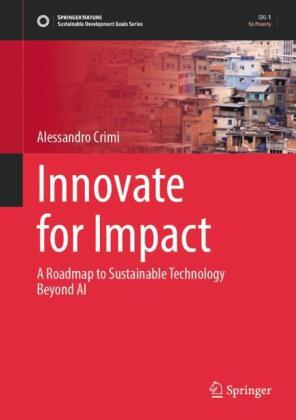
This book explores the synergy between artificial intelligence and medtech, offering a roadmap toward achieving the United Nations' Sustainable Development Goals. These technologies are part of a wave of innovation transforming how we learn, work, communicate, and live, from self-driving cars to AI-designed drugs and quantum computing. Yet most advances remain concentrated in high-income countries, leaving many low-income nations struggling to keep up.
I examine the social, political, and economic factors limiting development, highlight successful strategies, and explore AI and biotechnologies. Through case studies, the book shows how these tools can improve healthcare access, promote sustainable agriculture, and tackle other global challenges while considering ethical implications. By focusing on solutions accessible to low-income countries, it offers insights for innovators in middle- and high-income nations launching ventures with limited resources.
Future trends rely on interdisciplinary approaches integrating economy, sociology, and technology, recognizing that climate change, new health challenges, demographic shifts, and technologies are reshaping societies worldwide. Developing and advanced economies are deeply interconnected, making this broader perspective essential.
This book will appeal to undergraduate and graduate students of international development and public health, as well as those working in development, humanitarian initiatives, or innovation-focused startups and companies targeting low-resource environments.