






Diese Website verwendet Cookies und ähnliche Technologien. Dabei handelt es sich um kleine Textdateien, die auf eurem Computer gespeichert und ausgelesen werden. Indem ihr auf "Alles akzeptieren" klickt, stimmt ihr der Verarbeitung von Daten, der Erstellung und Verarbeitung von individuellen Nutzungsprofilen über Websites und über Partner und Geräte hinweg sowie der Übermittlung eurer Daten an Drittanbieter zu, die eure Daten teilweise in Ländern außerhalb der Europäischen Union verarbeiten (GDPR Art. 49). Einzelheiten hierzu findet ihr in den Datenschutzhinweisen. Die Daten werden für Analysen und für eigene Zwecke Dritter verwendet. Weitere Informationen, auch über die Datenverarbeitung durch Drittanbieter und die Möglichkeit des Widerrufs, findet ihr in den Einstellungen und in unseren Datenschutzhinweisen. Hier könnt ihr mit den notwendigen Tools fortfahren.
- Verlag: Springer, Berlin
- Autor: DeMond S. Miller
- Artikel-Nr.: KNV10359391
- ISBN: 9783032190291
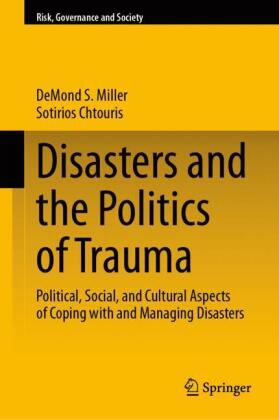
This book examines the impact of disasters on individuals and communities, from natural calamities like wildfires and hurricanes, technological disasters, and human-induced crises. The authors present case studies from Greece and the United States, including recent events such as the national wildfires in Greece, railway disasters, hurricanes, and the 2025 wildfires in California. Through these case studies, the authors analyze the role of the political-administrative state in shaping the socio-political capital of its citizens.
Operating at the interplay of politics, society, and culture in the aftermath of disasters, the book challenges traditional perspectives on disasters, asserting that they are inherently political incidents. It explores the enduring trauma experienced by individuals and communities, offering insights into the complex dynamics of power, uncertainty, and positionality. The book additionally discusses practical interventions, blending clinical sociological approaches to address personal and collective trauma. A timely and comprehensive exploration, this book allows for a better understanding of disasters as not merely events but critical political and social phenomena. It will therefore appeal to students, scholars, and researchers of sociology, political science, health sciences, and environmental sciences, as well as to policy-makers and practitioners.