






Diese Website verwendet Cookies und ähnliche Technologien. Dabei handelt es sich um kleine Textdateien, die auf eurem Computer gespeichert und ausgelesen werden. Indem ihr auf "Alles akzeptieren" klickt, stimmt ihr der Verarbeitung von Daten, der Erstellung und Verarbeitung von individuellen Nutzungsprofilen über Websites und über Partner und Geräte hinweg sowie der Übermittlung eurer Daten an Drittanbieter zu, die eure Daten teilweise in Ländern außerhalb der Europäischen Union verarbeiten (GDPR Art. 49). Einzelheiten hierzu findet ihr in den Datenschutzhinweisen. Die Daten werden für Analysen und für eigene Zwecke Dritter verwendet. Weitere Informationen, auch über die Datenverarbeitung durch Drittanbieter und die Möglichkeit des Widerrufs, findet ihr in den Einstellungen und in unseren Datenschutzhinweisen. Hier könnt ihr mit den notwendigen Tools fortfahren.
- Verlag: Hatje Cantz Verlag
- Autor: Heimann & Schwantes
- Artikel-Nr.: KNV98621814
- ISBN: 9783775762212
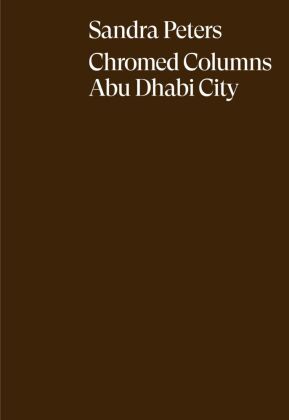
Chromed Columns Abu Dhabi is an artist's book in which sculptor Sandra Peters focuses on an architectural detail in the urban environment in which she lives and works. These are chrome-mirrored columns that are ubiquitous in downtown Abu Dhabi, but also characterize the urban landscapes of the United Arab Emirates (UAE) beyond. In everyday perception, the chrome-mirrored columns on the facades of buildings remain inconspicuous, even virtually invisible; only when isolated thematically do they come into consideration as significant elements of the urban environment, which they absorb like convex mirrors.
The photographic documentation of her urban environment is an integral part of Peters' artistic practice. She often develops sculptural works from her observations. In Chromed Columns Abu Dhabi, she reverses this relationship: the columns in the urban space of Abu Dhabi are architectural details, but Sandra Peters isolates them photographically and thematically as elements that have sculptural potential. She has selected 51 photographs for her publication. These are presented as a series of full-page illustrations. Further contexts for viewing the photographs are provided by an introductory text by the artist and an essay by architect and urbanism researcher George Katodrytis.