






Diese Website verwendet Cookies und ähnliche Technologien. Dabei handelt es sich um kleine Textdateien, die auf eurem Computer gespeichert und ausgelesen werden. Indem ihr auf "Alles akzeptieren" klickt, stimmt ihr der Verarbeitung von Daten, der Erstellung und Verarbeitung von individuellen Nutzungsprofilen über Websites und über Partner und Geräte hinweg sowie der Übermittlung eurer Daten an Drittanbieter zu, die eure Daten teilweise in Ländern außerhalb der Europäischen Union verarbeiten (GDPR Art. 49). Einzelheiten hierzu findet ihr in den Datenschutzhinweisen. Die Daten werden für Analysen und für eigene Zwecke Dritter verwendet. Weitere Informationen, auch über die Datenverarbeitung durch Drittanbieter und die Möglichkeit des Widerrufs, findet ihr in den Einstellungen und in unseren Datenschutzhinweisen. Hier könnt ihr mit den notwendigen Tools fortfahren.
- Verlag: Springer, Berlin
- Autor: Antonella Francesca Cicchiello
- Artikel-Nr.: KNV98877378
- ISBN: 9783032148391
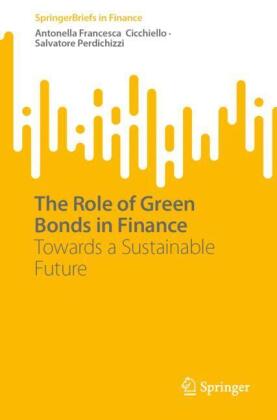
Green bonds have evolved from niche to systemically relevant instruments for reallocating capital toward a low-carbon, circular economy. This book offers a rigorous, accessible guide to green finance using Europe as the main laboratory and maps the landscape of labelled instruments while addressing risks such as greenwashing and data fragmentation. It traces the regulatory architecture from the EU Taxonomy to the European Green Bond framework and supervisory standards showing how credible definitions, disclosure, and verification underpin market integrity.
The book also clarifies how green bonds differ from conventional debt through use-of-proceeds discipline, ex-ante/post-issuance reporting, and independent external review. Its empirical core examines primary-market issuance yields (the greenium): once controlling for rating, sector, size, and timing, the average greenium is not statistically different from zero; any discount is concentrated in the market s early expansion and appears tied to scarcity and disclosure credibility rather than the label per se.
Finally, the book provides a forward agenda on taxonomy alignment, decision-useful MRV/assurance, and the role of AI in impact measurement and risk management. The volume serves scholars, students, regulators, and practitioners financing environmentally sustainable projects.