






Diese Website verwendet Cookies und ähnliche Technologien. Dabei handelt es sich um kleine Textdateien, die auf eurem Computer gespeichert und ausgelesen werden. Indem ihr auf "Alles akzeptieren" klickt, stimmt ihr der Verarbeitung von Daten, der Erstellung und Verarbeitung von individuellen Nutzungsprofilen über Websites und über Partner und Geräte hinweg sowie der Übermittlung eurer Daten an Drittanbieter zu, die eure Daten teilweise in Ländern außerhalb der Europäischen Union verarbeiten (GDPR Art. 49). Einzelheiten hierzu findet ihr in den Datenschutzhinweisen. Die Daten werden für Analysen und für eigene Zwecke Dritter verwendet. Weitere Informationen, auch über die Datenverarbeitung durch Drittanbieter und die Möglichkeit des Widerrufs, findet ihr in den Einstellungen und in unseren Datenschutzhinweisen. Hier könnt ihr mit den notwendigen Tools fortfahren.
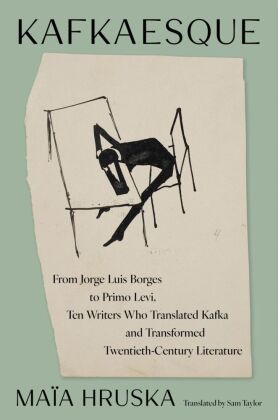
- Verlag: HarperCollins US
- Autor: Maïa Hruska
- Artikel-Nr.: KNV98607149
- ISBN: 9780063486249
A lively inquiry into a literary genius, the translators who immortalized him, and what it means to cultivate a rich inner life in turbulent times
"What happens to a writer's work when it is translated-specifically, what happens if his name is Franz Kafka?"
In Kafkaesque, Maïa Hruska traces the strange, shape-shifting legacy of one of literature's most elusive figures-not through traditional biography but through the lives of his earliest and most influential translators. With rigor and élan, she shows us how our understanding of Kafka is inevitably filtered through these voices, many of whom were, or would become, major writers and thinkers in their own right.
Jorge Luis Borges rendered Kafka into Spanish, recognizing in him a fellow architect of the infinite. Primo Levi used the German he acquired in a concentration camp to bring The Trial into Italian despite the "psychoanalytic repulsion" he felt toward Kafka. Bruno Schulz published his Polish edition of the same novel before being shot by a Nazi officer. Vladimir Nabokov annotated The Metamorphosis in exile, having undergone his own transformation-from native to foreigner. Milena Jesenská, Kafka's great love, translated him into Czech, a language he was both surrounded by and estranged from.
What emerges across these essays isn't just a portrait of a legendary writer and his translators but also a portrait of the twentieth century itself-its fractures and displacements, its aesthetic revolutions, its ethical crises. Part cultural history, part group biography, Kafkaesque is a dazzling meditation on language, identity, and the irreducible strangeness of reading and being read.