


Diese Website verwendet Cookies und ähnliche Technologien. Dabei handelt es sich um kleine Textdateien, die auf eurem Computer gespeichert und ausgelesen werden. Indem ihr auf "Alles akzeptieren" klickt, stimmt ihr der Verarbeitung von Daten, der Erstellung und Verarbeitung von individuellen Nutzungsprofilen über Websites und über Partner und Geräte hinweg sowie der Übermittlung eurer Daten an Drittanbieter zu, die eure Daten teilweise in Ländern außerhalb der Europäischen Union verarbeiten (GDPR Art. 49). Einzelheiten hierzu findet ihr in den Datenschutzhinweisen. Die Daten werden für Analysen und für eigene Zwecke Dritter verwendet. Weitere Informationen, auch über die Datenverarbeitung durch Drittanbieter und die Möglichkeit des Widerrufs, findet ihr in den Einstellungen und in unseren Datenschutzhinweisen. Hier könnt ihr mit den notwendigen Tools fortfahren.
- Verlag: De Gruyter
- Autor: Policarp Chi_ulescu
- Artikel-Nr.: KNV10734441
- ISBN: 9783111036182
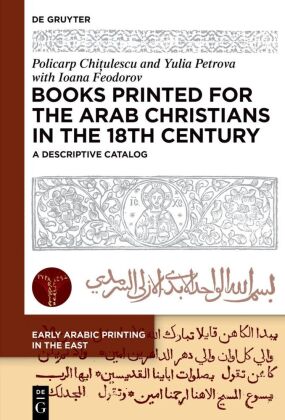
This catalog provides descriptive records of 54 Arabic books printed in Eastern Europe and the Arabic-speaking communities in the Ottoman East during the 18th century. It offers a thorough overview of the connections established through printing between the Romanian principalities and Arabic-speaking Christians in the eastern Mediterranean during this period. The catalog emphasizes the social progress that the printing culture brought to the Near East, to which Romanians made a significant contribution. The catalog also addresses the historical context of these connections and the printing activities of several prominent political and ecclesiastical figures. The books presented here are pivotal to the cultural history of the Ottoman East. They have been particularly significant in the context of conserving Byzantine-based Christianity in Arabic-speaking provinces in the region. Additionally, these books contributed to the standardization of Arabic liturgical texts and greatly influenced Christian Arabic literature. This catalog will be of interest to historians of the Arabic printed book, researchers of Arab Christian communities under Ottoman rule, as well as librarians and antiquarians because it will enable them to accurately identify and describe the 18th-century Arabic editions in their collections.