






Diese Website verwendet Cookies und ähnliche Technologien. Dabei handelt es sich um kleine Textdateien, die auf eurem Computer gespeichert und ausgelesen werden. Indem ihr auf "Alles akzeptieren" klickt, stimmt ihr der Verarbeitung von Daten, der Erstellung und Verarbeitung von individuellen Nutzungsprofilen über Websites und über Partner und Geräte hinweg sowie der Übermittlung eurer Daten an Drittanbieter zu, die eure Daten teilweise in Ländern außerhalb der Europäischen Union verarbeiten (GDPR Art. 49). Einzelheiten hierzu findet ihr in den Datenschutzhinweisen. Die Daten werden für Analysen und für eigene Zwecke Dritter verwendet. Weitere Informationen, auch über die Datenverarbeitung durch Drittanbieter und die Möglichkeit des Widerrufs, findet ihr in den Einstellungen und in unseren Datenschutzhinweisen. Hier könnt ihr mit den notwendigen Tools fortfahren.
- Verlag: Springer, Berlin
- Autor: Sérgio P. Neves
- Artikel-Nr.: KNV10750747
- ISBN: 9783032291479
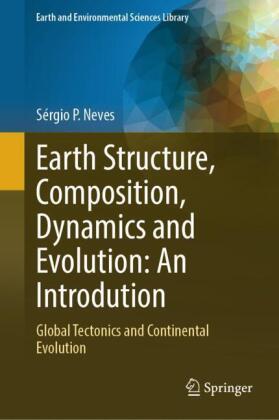
This book was written for undergraduate students but can also serve as an introduction to more advanced courses. It summarizes current knowledge on Earth's internal dynamics, relating continental evolution and mountain belts to mantle convection, of which plate motion is the surface expression. It is divided into three parts and sixteen chapters: Part I introduces Earth's structure, composition, lithosphere-asthenosphere system, plate tectonics, and mantle plumes; Part II focuses on the lithosphere, discussing plate kinematics, continental rifting, oceanic crust formation, subduction zones, and mountain building; Part III addresses Earth's origin, early continents, Archean-Proterozoic transitions, supercontinents, and the Paleozoic to Cenozoic orogens that shaped Pangea and later belts. Two appendices review basic concepts in Petrology, Geochemistry, Geochronology, and Isotope Geology.
To keep the text clear and focused, only a limited number of references are cited within the chapters. The selected articles include (1) review papers, providing a broad perspective on the topics and the development of ideas underlying current models, and (2) recent papers, mostly published within the last decade, illustrating the current state of the art. These references provide students with starting points for exploring specific subjects in greater depth.