


Diese Website verwendet Cookies und ähnliche Technologien. Dabei handelt es sich um kleine Textdateien, die auf eurem Computer gespeichert und ausgelesen werden. Indem ihr auf "Alles akzeptieren" klickt, stimmt ihr der Verarbeitung von Daten, der Erstellung und Verarbeitung von individuellen Nutzungsprofilen über Websites und über Partner und Geräte hinweg sowie der Übermittlung eurer Daten an Drittanbieter zu, die eure Daten teilweise in Ländern außerhalb der Europäischen Union verarbeiten (GDPR Art. 49). Einzelheiten hierzu findet ihr in den Datenschutzhinweisen. Die Daten werden für Analysen und für eigene Zwecke Dritter verwendet. Weitere Informationen, auch über die Datenverarbeitung durch Drittanbieter und die Möglichkeit des Widerrufs, findet ihr in den Einstellungen und in unseren Datenschutzhinweisen. Hier könnt ihr mit den notwendigen Tools fortfahren.
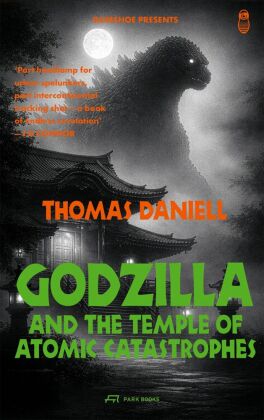
- Verlag: Park Books
- Autor: Thomas Daniell
- Artikel-Nr.: KNV10774685
- ISBN: 9783038604969
In Godzilla and the Temple of Atomic Catastrophes, the third volume in the Gumshoe series of "architectural detective stories," architectural historian and critic Thomas Daniell investigates the mysteries of the Temple of Atomic Catastrophes, designed in 1955 by Japanese architect Seiichi Shirai (1905-83). Although never built, the memorial has become a touchstone in debates about monuments, tradition, and culture in Japan's architectural world. Shirai's temple design is one of the few architectural works to address the topic of nuclear power, while Japanese fiction, manga, visual arts, and photography largely avoid it. Shirai and his temple design are little known in the West, yet they represent an important and influential chapter in Japan's architectural history. The 2011 Fukushima disaster once again made him, and the questions it raised, a central aspect of Japanese architectural discourse.
Thomas Daniell examines events and developments in Japan spanning more than a century, from World War I to the triple disaster of 2011-the earthquake, tsunami, and nuclear meltdown. He explores Japanese tradition and the relationships between Japanese architecture, art, and critical theory within a broader historical context. Written in the style of a "roman noir," his book offers an unconventional and entertaining search for the solution to this architectural mystery.