






Diese Website verwendet Cookies und ähnliche Technologien. Dabei handelt es sich um kleine Textdateien, die auf eurem Computer gespeichert und ausgelesen werden. Indem ihr auf "Alles akzeptieren" klickt, stimmt ihr der Verarbeitung von Daten, der Erstellung und Verarbeitung von individuellen Nutzungsprofilen über Websites und über Partner und Geräte hinweg sowie der Übermittlung eurer Daten an Drittanbieter zu, die eure Daten teilweise in Ländern außerhalb der Europäischen Union verarbeiten (GDPR Art. 49). Einzelheiten hierzu findet ihr in den Datenschutzhinweisen. Die Daten werden für Analysen und für eigene Zwecke Dritter verwendet. Weitere Informationen, auch über die Datenverarbeitung durch Drittanbieter und die Möglichkeit des Widerrufs, findet ihr in den Einstellungen und in unseren Datenschutzhinweisen. Hier könnt ihr mit den notwendigen Tools fortfahren.
- Verlag: Franz Steiner Verlag
- Autor: Maria Baramova
- Artikel-Nr.: KNV10895412
- ISBN: 9783515141093
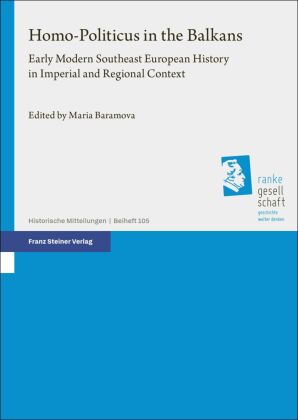
This book offers new perspectives on the history of Southeast Europe in the early modern period. It examines the Balkans as a space of imperial entaglements, political practice, and geopolitical negotiation between the Ottoman Empire, the Habsburg Monarchy, and other European powers. Renowned scholars explore diplomacy, warfare, the transfer of knowledge, and memory politics from comparative and trans-imperial viewpoints.
Three thematic sections address imperial policy and local responses; European perceptions of the Ottoman Empire; and memory politics and knowledge production in the region. Contributions on the Habsburgs, Russia, and the Ottoman Empire, on travel accounts of Constantinople, and on institutional struggles over memory offer fresh insights and comparative analyses. Published as a Festschrift in honour of Ivan Parvev, the book combines innovative research with fundamental questions of Balkan and European history. Scholarly yet accessible, it is essential reading for historians, students, and anyone interested in history of Southeastern Europe.
Awarded the 2021 Prize of the Berlin-Brandenburg Academy of Sciences and Humanities, donated by the Peregrinus Foundation (Rudolf Meimberg).