






Diese Website verwendet Cookies und ähnliche Technologien. Dabei handelt es sich um kleine Textdateien, die auf eurem Computer gespeichert und ausgelesen werden. Indem ihr auf "Alles akzeptieren" klickt, stimmt ihr der Verarbeitung von Daten, der Erstellung und Verarbeitung von individuellen Nutzungsprofilen über Websites und über Partner und Geräte hinweg sowie der Übermittlung eurer Daten an Drittanbieter zu, die eure Daten teilweise in Ländern außerhalb der Europäischen Union verarbeiten (GDPR Art. 49). Einzelheiten hierzu findet ihr in den Datenschutzhinweisen. Die Daten werden für Analysen und für eigene Zwecke Dritter verwendet. Weitere Informationen, auch über die Datenverarbeitung durch Drittanbieter und die Möglichkeit des Widerrufs, findet ihr in den Einstellungen und in unseren Datenschutzhinweisen. Hier könnt ihr mit den notwendigen Tools fortfahren.
- Verlag: Thieme, Stuttgart
- Autor: Amer F. Samdani
- Artikel-Nr.: KNV63626921
- ISBN: 9781626232600
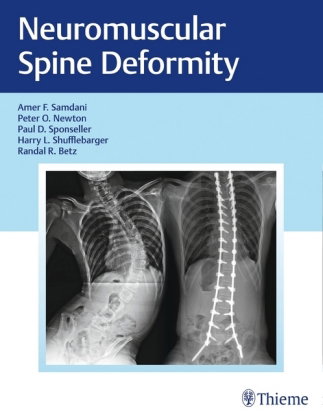
While most spine deformities such as scoliosis, kyphosis, and lordosis are idiopathic, muscular dystrophy, cerebral palsy, spinal cord tumors and lesions are associated with more severe curve progression. Bracing typically does not prevent progression of spinal curves, and surgery is necessary for these patients. Neuromuscular Spine Deformity by Amer F. Samdani et al is the most comprehensive book on this topic to date, detailing the latest surgical techniques for a wide range of common to rare neuromuscular pathologies, in 27 well-illustrated chapters.
The comprehensive content derives from the authors' collective years of hands-on expertise, evidence-based knowledge from the literature, and multicenter scoliosis studies performed by the prestigious Harms Study Group, a worldwide research-based association of spine surgeons. The text begins with discussion of preoperative evaluation, nonoperative management, and surgical considerations such as anesthesia, neuromonitoring, and estimated blood loss. Section two highlights pathology-specific surgical interventions, while sections three and four provide clinical pearls on a wide array of surgical techniques, complications, and patient outcomes.
Key Highlights
- Disease-related challenges including dislocated hips, hyperlordotic/hyperkyphotic spine in cerebral palsy, myelomeningocele-related myelodysplasia and spine deformity, Duchenne's muscular dystrophy, and spinal muscular atrophy
- Guidance on assessing the sagittal profile preoperatively and executing it intraoperatively in patients with spinal cord injury
- Multiple options for fixation including the new sacral alar iliac screw approach for sacropelvic fixation and correction of pelvic obliquity
- Postoperative issues including ICU management, incidence and management of early and late wound infection, instrumentation failure, junctional kyphosis, and cervical extension
- Health-related quality of life outcomes in pediatric patients with cerebral palsy who have undergone scoliosis surgery
This state-of-the-art resource is essential reading for orthopaedic surgeons, neurosurgeons, and trainees in these specialties. It is also a must-have reference for academic programs and institutional departments specializing in pediatric spine pathologies.