






Diese Website verwendet Cookies und ähnliche Technologien. Dabei handelt es sich um kleine Textdateien, die auf eurem Computer gespeichert und ausgelesen werden. Indem ihr auf "Alles akzeptieren" klickt, stimmt ihr der Verarbeitung von Daten, der Erstellung und Verarbeitung von individuellen Nutzungsprofilen über Websites und über Partner und Geräte hinweg sowie der Übermittlung eurer Daten an Drittanbieter zu, die eure Daten teilweise in Ländern außerhalb der Europäischen Union verarbeiten (GDPR Art. 49). Einzelheiten hierzu findet ihr in den Datenschutzhinweisen. Die Daten werden für Analysen und für eigene Zwecke Dritter verwendet. Weitere Informationen, auch über die Datenverarbeitung durch Drittanbieter und die Möglichkeit des Widerrufs, findet ihr in den Einstellungen und in unseren Datenschutzhinweisen. Hier könnt ihr mit den notwendigen Tools fortfahren.
- Verlag: Thieme, Stuttgart
- Autor: Claudia Leite
- Artikel-Nr.: KNV53355886
- ISBN: 9781626230217
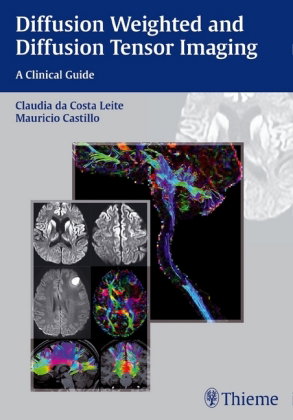
Diffusion-weighted imaging (DWI) is an integral part of routine neuroimaging, used nearly universally in brain MRIs, and more recently for the spine, spinal cord, and head and neck. DWI provides clinically relevant information on conditions including stroke, infection, and neoplasms. Diffusion tensor imaging (DTI) is a powerful, newer technique with the potential for multiple protocols, including the diagnosis of mild traumatic brain injury and psychiatric disorders.
Written by leading authorities in neuroradiology and radiology, Diffusion Weighted and Diffusion Tensor Imaging: A Clinical Guide provides key points and summaries on the concepts and applications required for proper implementation and interpretation of DWI and DTI.
Key Features:
- More than 600 high-quality illustrations
- Protocols and applications from early childhood to older adulthood
- Methods to differentiate normal versus pathological states
- Brain edema pathophysiology and use of DWI to distinguish between cytotoxic and vasogenic edema
- Utilization of DWI and DTI to diagnose trauma, white matter disease, tumors, cerebrovascular disease, and head, neck, and spine disorders
This concise handbook is an invaluable resource for neuro-radiologists and radiologists, as well as fellows and residents in these disciplines. With the expanding use of these procedures, neuroscientists, neurologists, neurosurgeons, and psychiatrists will also find it indispensable.