






Diese Website verwendet Cookies und ähnliche Technologien. Dabei handelt es sich um kleine Textdateien, die auf eurem Computer gespeichert und ausgelesen werden. Indem ihr auf "Alles akzeptieren" klickt, stimmt ihr der Verarbeitung von Daten, der Erstellung und Verarbeitung von individuellen Nutzungsprofilen über Websites und über Partner und Geräte hinweg sowie der Übermittlung eurer Daten an Drittanbieter zu, die eure Daten teilweise in Ländern außerhalb der Europäischen Union verarbeiten (GDPR Art. 49). Einzelheiten hierzu findet ihr in den Datenschutzhinweisen. Die Daten werden für Analysen und für eigene Zwecke Dritter verwendet. Weitere Informationen, auch über die Datenverarbeitung durch Drittanbieter und die Möglichkeit des Widerrufs, findet ihr in den Einstellungen und in unseren Datenschutzhinweisen. Hier könnt ihr mit den notwendigen Tools fortfahren.
- Verlag: Thieme, Stuttgart
- Autor: Frank P Cammisa
- Artikel-Nr.: KNV45501683
- ISBN: 9781604068733
Thieme congratulates Frank P. Cammisa on being chosen by New York magazine for its prestigious 'Best Doctors 2015' list.
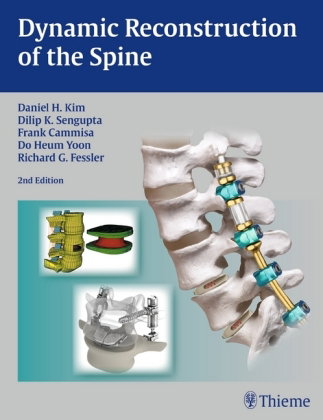
Dynamic Reconstruction of the Spine, Second Edition is the most up-to-date resource on the instrumentation, technologies, and fundamental science integral to achieving spine motion preservation and stabilization. It is a completely revised text that includes not only the latest technologies and surgical approaches, including MIS techniques, but also significantly more detail on the clinical biomechanics of the spine than the previous edition. Readers will appreciate the guidance this book provides on how to: successfully adopt new technology, find appropriate indications, address common safety and efficacy issues, and answer health economics questions for ethics committees and payers.
Key Features:
- A substantial revision, with entirely new chapters in three quarters of the book, including a large section on basic as well as more advanced biomechanics topics
- Highly visual - contains 20% more figures than the previous edition
- Discusses and explains current advances in genetic and molecular technologies used to repair the spinal disc
- Includes an unbiased critique of the pro cons, clinical outcomes, and comparative outcomes of different devices
This new edition is an indispensable reference for orthopedic surgeons, neurosurgeons, and radiologists, as well as residents and fellows seeking the latest information on the technologies used in spine motion preservation and stabilization.