






Diese Website verwendet Cookies und ähnliche Technologien. Dabei handelt es sich um kleine Textdateien, die auf eurem Computer gespeichert und ausgelesen werden. Indem ihr auf "Alles akzeptieren" klickt, stimmt ihr der Verarbeitung von Daten, der Erstellung und Verarbeitung von individuellen Nutzungsprofilen über Websites und über Partner und Geräte hinweg sowie der Übermittlung eurer Daten an Drittanbieter zu, die eure Daten teilweise in Ländern außerhalb der Europäischen Union verarbeiten (GDPR Art. 49). Einzelheiten hierzu findet ihr in den Datenschutzhinweisen. Die Daten werden für Analysen und für eigene Zwecke Dritter verwendet. Weitere Informationen, auch über die Datenverarbeitung durch Drittanbieter und die Möglichkeit des Widerrufs, findet ihr in den Einstellungen und in unseren Datenschutzhinweisen. Hier könnt ihr mit den notwendigen Tools fortfahren.
- Verlag: Norton
- Autor: Jaak Panksepp
- Artikel-Nr.: KNV32280681
- ISBN: 9780393705317
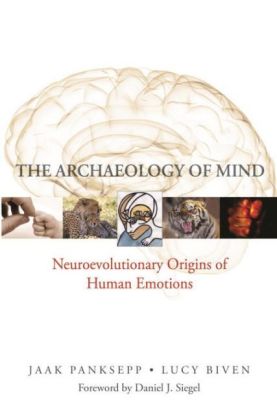
What makes us happy? What makes us sad? How do we come to feel a sense of enthusiasm? What fills us with lust, anger, fear, or tenderness? Traditional behavioral and cognitive neuroscience have yet to provide satisfactory answers. The Archaeology of Mind presents an affective neuroscience approach -which takes into consideration basic mental processes, brain functions, and emotional behaviors that all mammals share - to locate the neural mechanisms of emotional expression. It reveals - for the first time - the deep neural sources of our values and basic emotional feelings.
This book elaborates on the seven emotional systems that explain how we live and behave. These systems originate in deep areas of the brain that are remarkably similar across all mammalian species. When they are disrupted, we find the origins of emotional disorders:
- SEEKING: how the brain generates a euphoric and expectant response
- FEAR: how the brain responds to the threat of physical danger and death
- RAGE: sources of irritation and fury in the brain
- LUST: how sexual desire and attachments are elaborated in the brain
- CARE: sources of maternal nurturance
- GRIEF: sources of non-sexual attachments
- PLAY: how the brain generates joyous, rough-and-tumble interactions
- SELF: a hypothesis explaining how affects might be elaborated in the brain
The book offers an evidence-based evolutionary taxonomy of emotions and affects and, as such, a brand-new clinical paradigm for treating psychiatric disorders in clinical practice.